


If you’ve landed here, you probably own a property in one of the most sought after, classic and green neighborhoods of North Tel Aviv : Neve Avivim. Selling an apartment in this neighborhood is not like selling an apartment anywhere else. There’s a precise mix here of history, longtime families, young couples looking for excellent schools, and urban renewal potential hovering over almost every building. From our experience, many sellers think that because the neighborhood is so sought after, the apartment “will sell itself.” The reality? It’s a bit more complex than that. In this article we’re going to dive deep into the DNA of selling an apartment in Neve Avivim. We’ll reveal the secrets behind the scenes, how to really reach the right buyers (hint: they aren’t always searching the listing sites), why the neighborhood community is your secret weapon, and how a small pricing mistake can cost you hundreds of thousands of shekels. Grab a cup of coffee, and let’s get started.
Executive Summary: What Will You Get from This Article?
- The psychology of Neve Avivim: Why buyers are willing to pay a premium for the neighborhood and how to leverage it.
- Smart digital marketing: How to locate the exact buyer even before they start actively searching.
- The power of community: The unfair advantage of knowing the families and residents of the area in advance.
- Pricing traps: Common mistakes sellers make when they try to set a price for a property.
- The art of negotiation: How to keep the maximum amount of money in your pocket, with minimum stress.
1. The Neve Avivim Paradox: Why Does This Neighborhood Play by Different Rules?
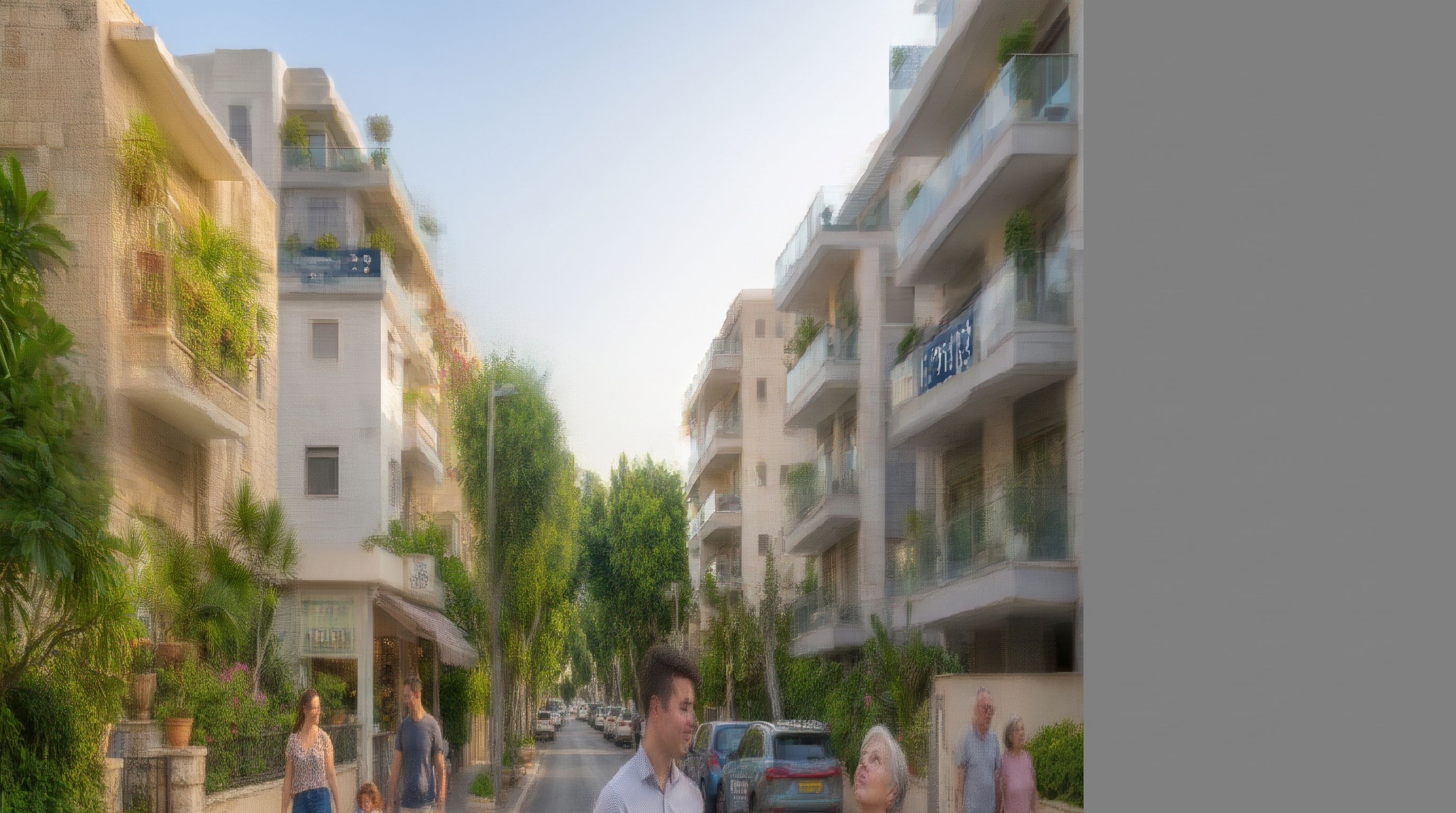
I always say that Neve Avivim is a kind of magical bubble within North Tel Aviv. It isn’t flashy like other areas, but it has a quality calm that draws a very specific crowd. When we set out to sell an apartment on streets like Yehuda HaNasi, Oppenheimer or Tagore, we’re not only targeting people looking for “four rooms.” We’re selling a lifestyle. We’re selling the proximity to the university, the excellent schools (did someone say Alliance?), and the green gardens that feel like a village in the middle of the city. From our experience, Neve Avivim buyers fall into two groups. The first group is the “internal upgraders”: families who already live in the neighborhood, whose kids have grown, and who need another room but would never in their lives leave the area. The second group is families from outside the city looking for their first foothold in North Tel Aviv education. Each of these audiences needs to be spoken to in a slightly different language.
The Hidden Magic of the Older Apartments
Many of the buildings in Neve Avivim were built in the 1970s and 1980s. To the average seller, this may look like a disadvantage. “I don’t have a safe room (Mamad),” “The elevator is small.” But this is where professional experience comes into the picture. We know how to turn this “disadvantage” into a huge advantage. Why? Because the apartments of the past were designed differently. The rooms are huge. The living room is spacious. There are no strange nooks and wasted corners. A smart buyer (or one we’re guiding) understands that a 4 room, 110 sqm apartment in Neve Avivim feels like a 5 room apartment in new construction. That kind of space simply can’t be bought today. And that’s before we’ve even talked about the urban renewal potential.
2. “I’ll Just Put a For Sale Sign on the Balcony, What Could Go Wrong?”
Oh, the sign on the balcony. The classic of the 1990s. Look, I’m not saying signs don’t work at all. Sometimes a neighbor walking down the street really is looking for an apartment for their kid. But relying only on the sign is like trying to catch a tuna with sewing thread in the middle of the Yarkon River. When someone puts up a sign or posts a free ad on an online listing board, they expose themselves to so much “noise.” Suddenly the phone won’t stop ringing. And who’s on the line? Curious neighbors who want to know how much you’re selling for so they can estimate the value of their own apartment. Buyers with no budget who come “to see what’s on the market.” And above all, a huge waste of time. Selling an apartment worth several million shekels isn’t an evening hobby. It requires careful screening. When we take on a property, we put potential buyers through a gentle but thorough vetting. Do they have mortgage approval in principle? Has their previous apartment already been sold, or are they dependent on a sale? We save our sellers dozens of hours of unnecessary tours of their home with people who will never buy.
3. Modern Real Estate Marketing: Why Your Buyer Probably Isn’t on Yad2
This is where we reach a critical point. Most real estate agencies still work with methods from the last century. They post an ad, snap a few photos on the phone, and pray. But in today’s world, real estate is based on data. By the way, this is where the enormous power of connecting to advanced digital platforms comes in. When we want to sell a luxurious 5 room apartment in Neve Avivim, we don’t wait for the buyer to look for us. We find them.
How Does a Smart Real Estate Campaign Really Work?
Imagine there’s a family currently living in Herzliya. They just searched Google for “recommended schools in North Tel Aviv.” At the same time, they’re reading articles about mortgage eligibility. The algorithm knows they’re ripe for a move. Through smart management of advertising budgets on platforms like Google, Facebook and even Instagram, we show your property to exactly this family. They’re scrolling through their feed in the evening, and suddenly, boom. A stunning, professionally photographed ad for an amazing apartment on Oppenheimer that fits their needs exactly. This is called “creating demand.” We reach the passive buyers: those who have the money and the desire, but haven’t yet started combing through the listing sites. This audience is usually willing to pay more, because we bring them the perfect solution on a silver platter, without them having to enter a bidding war against other buyers.
4. The Community Secret: How Does a Music School Help You Sell Your Apartment?
This may sound a little funny at first, but listen carefully, because it’s a game changer. Real estate isn’t walls, it’s people. And people need trust. In a neighborhood like Neve Avivim, where the sense of community is very strong, real networking doesn’t happen at buttoned up business events. It happens on the ground. In everyday life. Think of a network of connections built over more than 15 years. Daily familiarity with parents, children, families and teachers from the area. It’s a network of absolute trust. When a family is planning to expand, or when an older couple starts thinking about downsizing to a smaller place, where do they talk about it first? Not with an outside broker. They talk about it in their own social circles. This deep connection to the neighborhood community, created through ongoing educational activity in North Tel Aviv, allows us to know about properties before they come onto the market. But more importantly, it allows us to know who is looking to buy, what their budget is, and what really matters to them. More than once, we’ve managed to connect a seller and a buyer in Neve Avivim purely through deep personal acquaintance, closing the circle quietly, smoothly and at a record price, without the apartment being advertised anywhere. That’s the power of a community that grows opportunities.
5. 3 Fatal Pricing Mistakes That Will Cost You a Lot of Money
Pricing is an art. It’s not an exact science, but it’s certainly not guesswork either. From our experience on the ground, almost every seller is guilty of one of the following three mistakes:
Mistake No. 1: The “Upstairs Neighbor” Method
The most common sentence we hear is: “But the Cohen family on the 4th floor sold for ₪5.5 million!” What they don’t tell you is that the Cohens’ apartment was renovated from the ground up, faced the quiet southwest, and had parking registered in the Land Registry (Tabu). Your apartment, on the other hand, needs new plumbing and faces a noisier street. Every one of these parameters is worth money. Relying on neighbors’ rumors usually leads to overpricing, which makes the apartment “burn” on the market.
Mistake No. 2: Calculating “How Much I Need” Instead of “How Much the Apartment Is Worth”
This is very human. You want to buy a villa in the Sharon for ₪7 million, you have a mortgage of ₪1 million, so you have to sell the apartment in Neve Avivim for ₪6 million. The problem? The real estate market doesn’t care about your financial dreams. It prices a property according to its objective value. When you price according to your needs, the apartment sits empty for long months.
Mistake No. 3: “Let’s Ask High, We Can Always Come Down”
This is the most dangerous trap. Everyone thinks you need to leave some “meat” for negotiation. But if you price the apartment 15% above the market, you’re not leaving meat; you simply don’t show up in the relevant buyers’ searches. A buyer who has ₪5 million sets their search on the listing site to go up to ₪5.2 million. If you priced at 5.6 because you wanted to “come down slowly,” they never even saw your apartment. And whoever did see it compares it to apartments that are really worth ₪5.6 million, and then your apartment looks bad. In the end, you’ll be forced to lower the price significantly, and buyers will already sense that you’re under pressure.
6. The Word Israelis Hate but That Protects Them: Exclusivity
Let’s talk about the elephant in the room. Exclusivity. For some reason, a stigma has formed in Israel that exclusivity means “tying down” the seller. The reality is exactly the opposite. When you have 5 different brokers working on your apartment without exclusivity, none of them really represents you. They represent the buyer. Why? Because they know that if they don’t close a deal quickly, another broker will. So their interest is to persuade you to lower the price just to close. Beyond that, when a buyer sees the same apartment advertised by 4 different brokers, with different photos and sometimes even at different prices, it signals panic. It signals that you’re desperate to sell. When we take on a property with exclusive brokerage, we become your partners. We invest huge budgets in digital marketing, video and virtual tours. Why? Because we know our time and money won’t go down the drain tomorrow morning. We represent your interest alone, and we fight for every shekel of the sale price.
7. Home Staging: 5 Changes for ₪5,000 That Will Add ₪150,000 to the Price
People buy with their eyes. Period. Especially in Neve Avivim, where some of the apartments still have a, let’s say, authentic design from the 1980s. Before a potential buyer walks through the door, we have to create the experience of a home for them, not a storage room.
- Holy light: Replace burned out bulbs with warm, powerful ones, and open all the shutters. A well lit apartment is perceived as bigger and more luxurious.
- Depersonalization: Take the magnet collection off the fridge, the crowded family photos off the walls, and put away the medical equipment. The buyer needs to imagine their own family there, not feel like they’re invading your privacy.
- Talking walls: A simple white paint job in the living room and hallway (yes, with a little spackle where the kids drew) brings back the feeling of cleanliness and freshness.
- Small repairs, big damage: A dripping faucet, a loose cabinet handle, or a broken shutter. Buyers see a small flaw and start thinking: “What else is broken here beneath the surface?” Fix it in advance.
- The scent of closing: You don’t need to bake yeast cakes like in American movies, but airing the place out well and making sure there’s a pleasant, subtle scent has a dramatic effect on the buyer’s subconscious.
8. The Battle Zone: How Do You Negotiate in North Tel Aviv?
We’ve reached the stage where everyone starts to sweat. A price offer. Real estate negotiation in Israel is often very emotional. The seller is offended by the low offer, and the buyer feels the seller is greedy. This is exactly where the value of a professional broker is measured. We’re the “buffer”: an emotional cushion. When the buyer makes an outrageous offer, I don’t pass it on to you as is so that you get upset. I know how to hold a professional conversation with them, show them comparable deals from the past month in Neve Avivim, and explain why their offer isn’t realistic, before I’ve even disturbed your peace. In addition, in a negotiation you have to understand what motivates the other side. Does the buyer need a quick handover? Maybe we’ll be a little flexible on the price but save you half a year of rent? Do they care a lot about the furniture? We use every psychological and business tool to engineer a deal from which you come out ahead and at ease.
9. Are TAMA 38 and Pinui Binui (Evacuation and Reconstruction) a Blessing or a Curse for a Sale?
In Neve Avivim, you can’t throw a stone without hitting an urban renewal sign. For some sellers, it looks like a promise of wealth. For others, a bureaucratic nightmare. If your building is in an urban renewal process, the pricing must take the exact status into account. Are there only signatures? Is there a permit? A buyer who pays a premium today for an apartment with Pinui Binui potential is pricing in the risk. From our experience, full transparency with the buyer about the renewal stages prevents deals from blowing up just before signing. We make sure to get all the engineering and legal information out in advance, and present it to the buyer as an asset, not a problem.
Wrapping Up Your Sales Journey
Selling an apartment in Neve Avivim is an amazing process, but it demands uncompromising professionalism. It’s not enough to know the streets; you need to know the people. You need to know how to combine a deep understanding of the neighborhood community with a technological marketing front at the highest level. Whether that means using data to target buyers, or creating personal connections based on years of trust. When you have the right support system, one that accompanies you from accurate pricing, through preparing the property, careful buyer screening and cool headed negotiation, the sale turns from a burden into an empowering and especially rewarding experience.
11 Burning Questions (and Honest Answers) About Selling an Apartment in Neve Avivim
- How long does it take on average to sell an apartment in Neve Avivim today? With the right pricing and aggressive marketing, we see deals closing within 3 to 6 weeks. If the apartment is priced too high or isn’t marketed correctly, it can take half a year or more.
- Should I renovate the apartment before the sale? In most cases, not a major renovation. Buyers in Neve Avivim usually prefer to buy as is and renovate to their own taste. That said, light repairs, paint and tidying up (home staging) are a must and will pay back the investment many times over.
- How do I know the real price of my apartment? Not through Madlan and not through the neighbors. You need a professional home valuation based on real deals recently closed within a 300 meter radius, weighing the floor, the orientation, and the condition of the building and the apartment.
- What is especially important for buyers to check in this neighborhood? School registration zones are critical here. In addition, buyers check the parking situation (a known problem on some of the older streets) and future plans for the building or neighboring buildings.
- Is it worth holding an Open House? It depends on the property. In Israel the concept works less well than in the US and mainly attracts the curious. We prefer to hold targeted tours only for clients who have passed financial screening.
- Who pays the capital gains tax (Mas Shevach) on the sale? The seller. That said, a single residential apartment is often eligible for an exemption from capital gains tax under certain conditions. It’s very important to consult a real estate attorney before you set out, to avoid painful surprises.
- What’s the difference between advertising on Yad2 and paid digital marketing? Yad2 only catches whoever is actively searching at that moment. A paid campaign locates people across the web with a suitable financial profile and a hidden desire to move, and brings the property to their screen even before they thought of searching.
- Does a broker raise the final sale price? Definitely. A professional broker creates competition for the property, prevents negotiation mistakes the seller might make under emotional pressure, and brings in higher quality buyers, which usually covers the brokerage fee and leaves more money for the seller.
- I’m afraid the broker will pester me. How do we work together the right way? Agree in advance on fixed viewing hours each week, and receive a consolidated update once a week on the number of impressions, leads and offers. Organized communication prevents daily harassment.
- How does main road noise affect the price in Neve Avivim? There are completely quiet streets and there are streets that border on major roads. A quiet apartment at the back of the building can sell for 5% to 10% more than a front facing apartment on a noisy road, even in the same building.
- Do neighborhood residents tend to stay in the neighborhood when they move? Absolutely. The rate of resident loyalty to Neve Avivim is among the highest in Tel Aviv. That’s why a large share of your potential buyers already live within walking distance of your apartment.
