The first neighborhood built across the Yarkon: wide lawns, low rise buildings, Tel Aviv University at the gate, and a wave of renewal that is changing its face
RS Nadlan is a real estate marketing and brokerage company working in Tel Aviv, Ramat HaSharon, Herzliya, Ra’anana and Kfar Saba, specializing in the neighborhoods of North Tel Aviv. Our offices are in Ramat Aviv Gimel, a few minutes’ drive from Ramat Aviv HaYeruka. Ramat Aviv HaYeruka, also known as Ramat Aviv Aleph or Old Ramat Aviv, is the neighborhood where Golda Meir lived, the neighborhood that took its name from a hotel that stood by the sea, and one of the greenest and quietest neighborhoods in the city: three and four story buildings among large lawns, private homes on the side streets, and Tel Aviv University, the Eretz Israel Museum and Ramat Aviv Mall within walking distance. We know the buildings, the renewal projects and the deals in the neighborhood, and we guide buyers and sellers all the way to the precise property, including Off Market properties that are not advertised on listing sites.
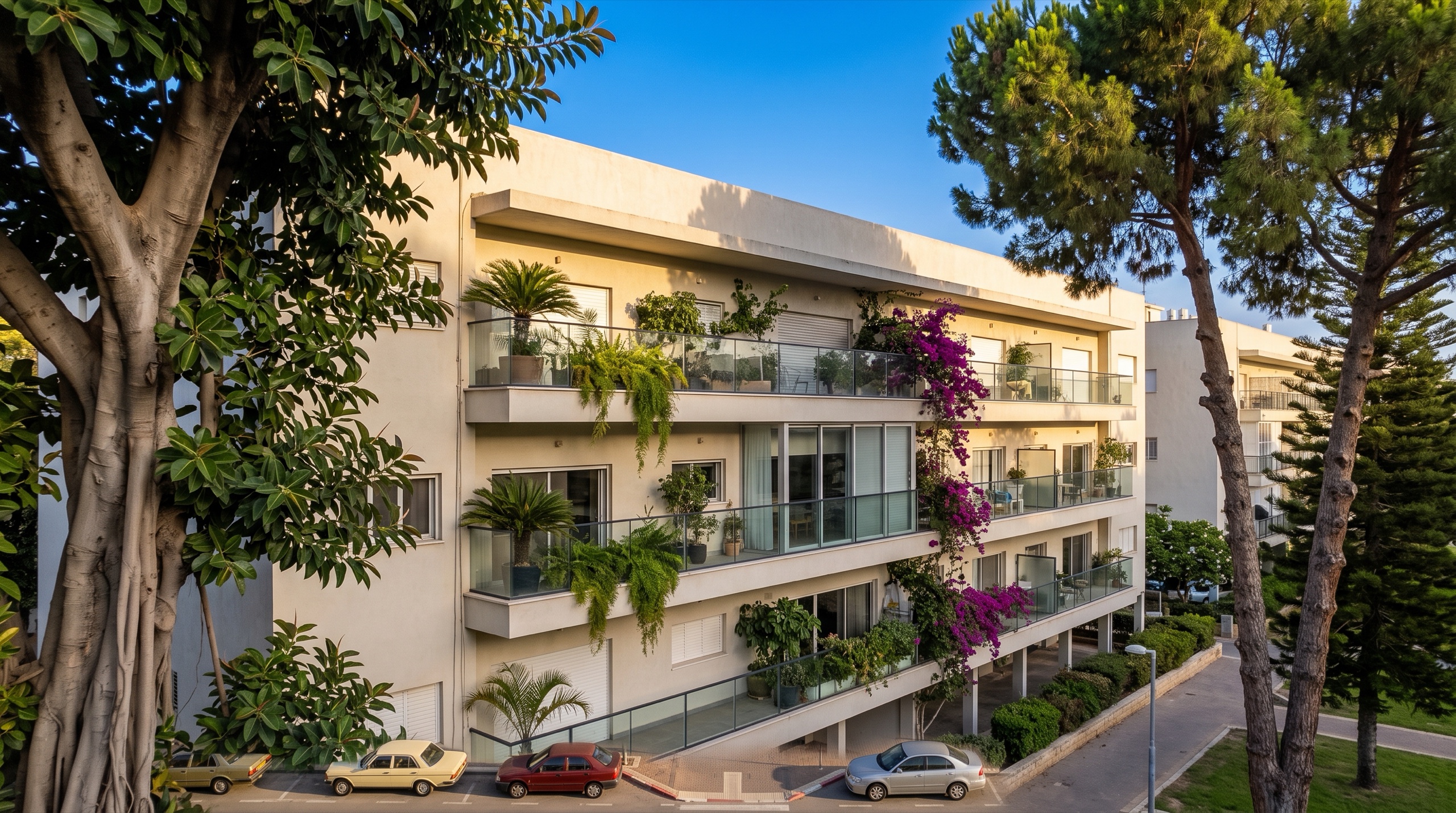
Ramat Aviv HaYeruka was established in the 1950s, following the great wave of immigration, and was the first of the new northern neighborhoods built across the Yarkon. It was planned by a team of architects led by Yitzhak Perlstein and Robert Bannet, who set out to build a “neighborhood unit” inspired by European models: housing blocks planned as a single unit, with great weight given to open spaces. For this plan the two won the Rokach Prize for engineering works in June 1958.
The result is still felt today. The construction combines ground level homes and apartment buildings of no more than four stories, long buildings with several entrances, and large green spaces between them. In 1957 a 14 story residential tower was built at 2 Fichman Street, which was then the tallest residential building in Israel.
The neighborhood took its name from the “Ramat Aviv” Hotel, which opened in 1951 west of the Coastal Highway. Golda Meir, who lived in the neighborhood at 8 HaBaron Hirsch Street from 1959 to 1978, asked that the neighborhood be named after the hotel, and so it was. The neighborhood is bounded by Einstein Street to the north, Haim Levanon Street to the east and south, and Namir Road to the west.
Few neighborhoods in Israel concentrate so many educational institutions in such a small area: four elementary schools, 11 municipal kindergartens, one of the leading high schools in the country, and Tel Aviv University right next to the neighborhood.
83 Feinstein Street. About 545 students, with an average of 30 students per class.
11 Groniman Street. About 436 students, with an average of 26 students per class.
47 Reading Street. A relatively small school, with about 235 students.
35 Reading Street. About 214 students, with an average of 27 students per class.
26 Reading Street. About 1,510 students; it has operated on the Ramat Aviv campus since 1958 and is considered one of the leading schools in Israel.
The main entrance, Gate 20, is on Haim Levanon Street, and Gate 2 is on Klausner Street. The campus is the focal point of the neighborhood.
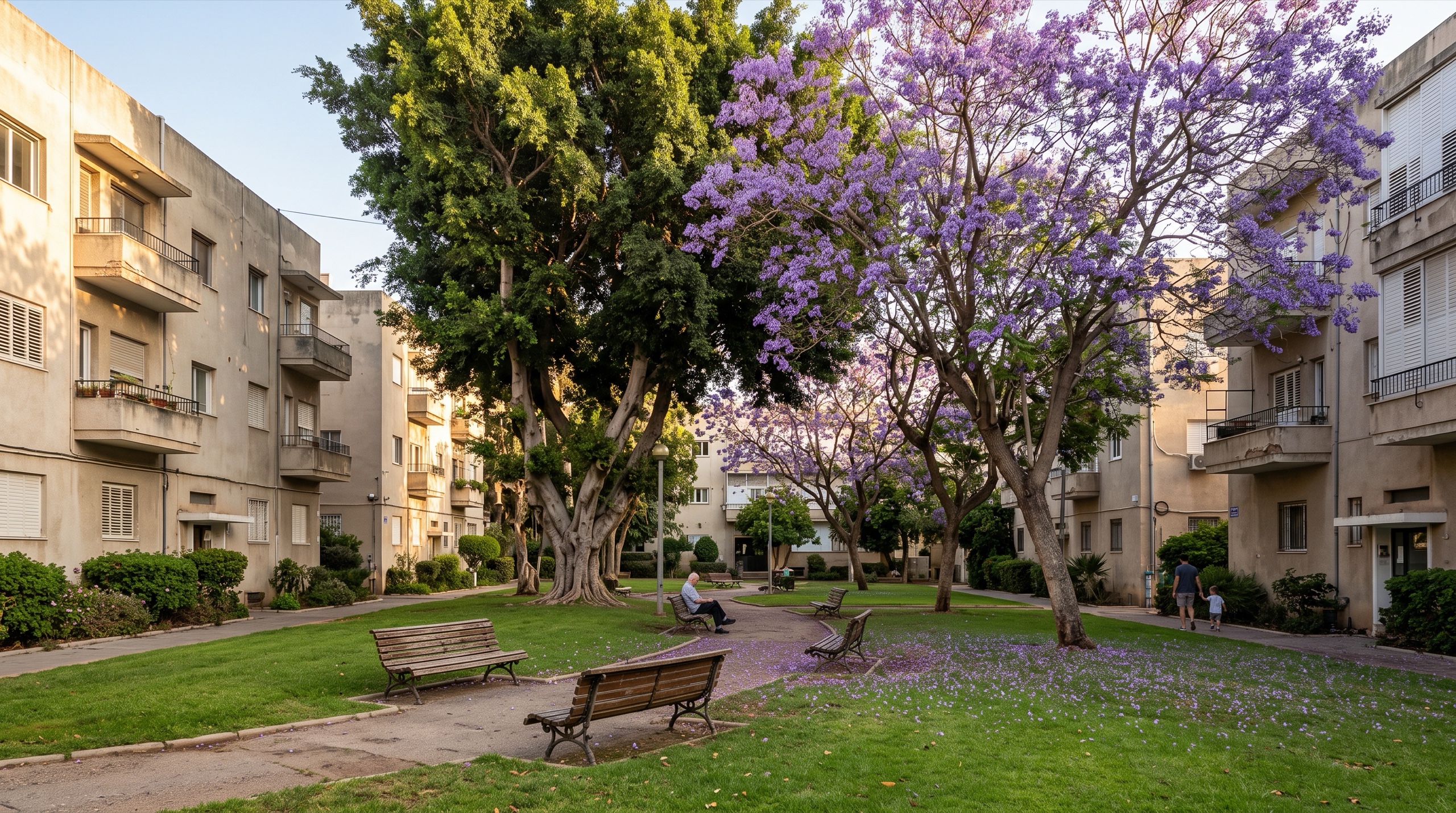
Community life in the neighborhood centers on Haim Levanon Street and Brodetsky Street. In March 2026 the planning and building subcommittee approved the design plan for a new community center at 37 Haim Levanon: about 4,700 sqm on a 6.8 dunam lot, with an auditorium, a library, a café, an early childhood center, a senior center, a dance studio and a youth center.
37 Haim Levanon Street. An early childhood center, one of the leading dance schools in the country, play areas, sports, and the “Gil BeGil” club for retirees.
7 Haim Levanon Street. Open since 1967, it teaches swimming from age five, with water aerobics and separate swimming days for men and women.
17 Brodetsky Street, in the former “Ramat Aviv” cinema building. Opened in September 2024: 800 sqm with a fitness studio, a ceramics studio, a work lounge and a café.
Brodetsky Garden with a renovated fitness area, and Golda Garden on HaBaron Hirsch Street, in memory of Golda Meir. Synagogues: Mishkan Achim at 21 Brodetsky and the Rambam Synagogue at 19 Brodetsky.
The neighborhood also has a public history: Beit Brodetsky at 36 Brodetsky Street, designed by Robert Bannet, was inaugurated in 1957 as an absorption center for professional immigrants from Western countries, and today serves as student dormitories. The neighborhood has a Scouts troop, a HaShomer HaTzair chapter and a branch of the Krembo Wings youth movement.
The Brodetsky Center, around 15 to 43 Brodetsky Street, is the heart of neighborhood retail: a café, restaurants, a supermarket open around the clock, a pharmacy and a bank. The shopping center at 43 Brodetsky covers about 1,500 sqm, with an underground parking garage.
For bigger shopping trips, Ramat Aviv Mall is at 40 Einstein Street, on the northern border of the neighborhood: it opened in 1997 and has about 20,000 sqm of retail space and 120 shops. The regional center on which the mall was built was planned back in the 1950s by Yitzhak Perlstein, the planner of the neighborhood.
17 Brodetsky. The chain’s first branch, opened in 2003. Sunday to Friday 8:00 AM to 10:00 PM, Saturday 9:00 AM to 10:00 PM.
15 Brodetsky. Open all week, 12:00 PM to 11:00 PM.
43 Brodetsky, in the shopping center.
15 Brodetsky. A French style restaurant.
17 Brodetsky, next to Bita Café.
AM:PM at 15 Brodetsky, open 24 hours. Shufersal Sheli at 93 Brodetsky.
19 Zelig Brodetsky.
Branch 833, 43 Brodetsky.
A mehadrin kosher bakery, with deliveries.
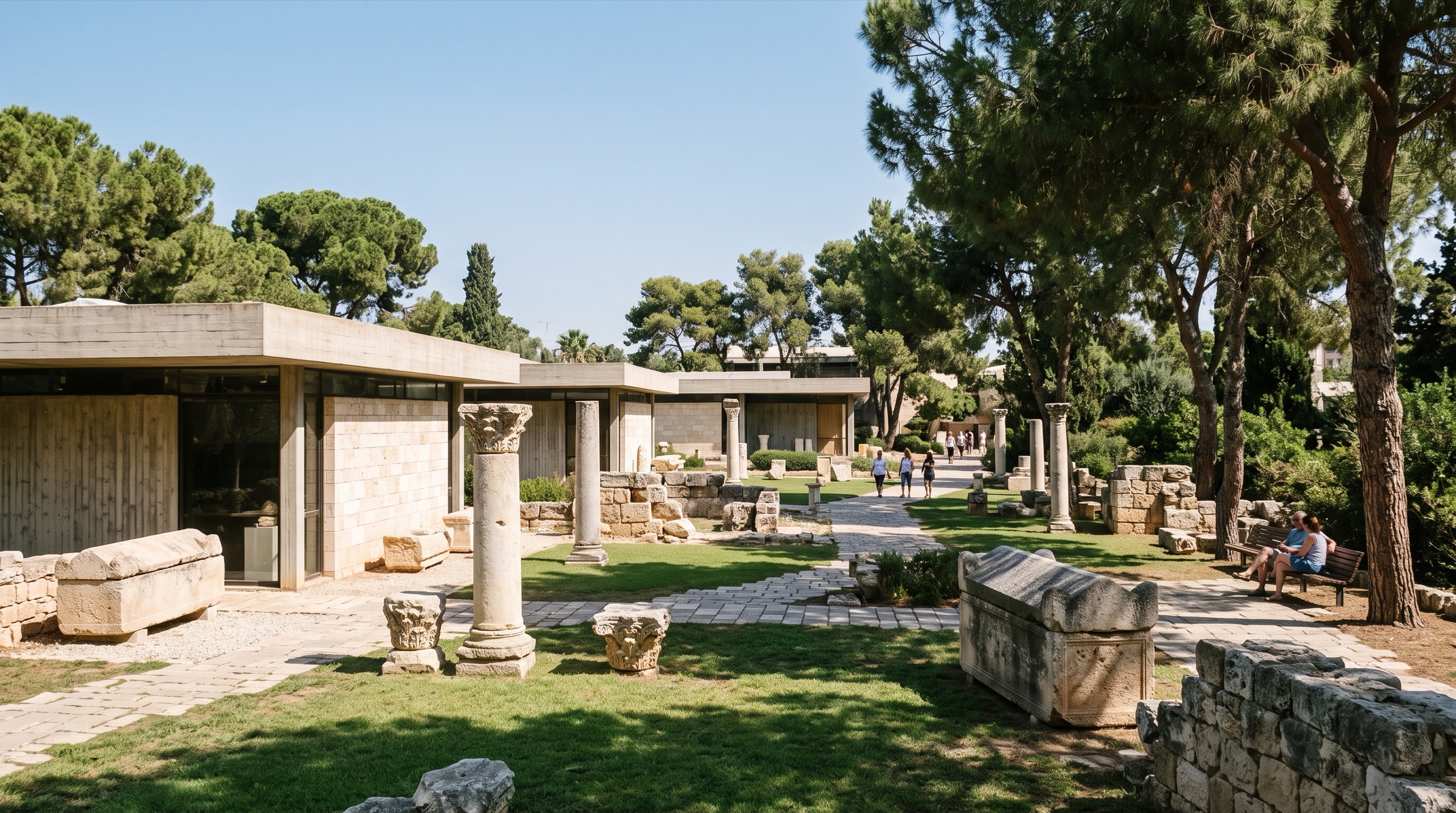
Haim Levanon Street, on the southern and eastern border of the neighborhood, is a true cultural axis. The Eretz Israel Museum at 2 Haim Levanon, inaugurated in 1959, includes the Glass Pavilion, the Kadman Numismatic Pavilion, a planetarium and Tel Qasile. The Palmach Museum at 10 Haim Levanon, which opened in 2000, offers an experiential exhibit for groups by advance booking, and next to it is the Yitzhak Rabin Center at 8 Haim Levanon.
Across Namir Road is Tel Baruch Beach, a Blue Flag beach with lawns, water sports and a promenade that connects to the Yarkon Bridge and the Tel Aviv Port. And south of the neighborhood lies Yarkon Park, with its paths and lakes.
At the Reading Brodetsky stop, Dan lines 7 and 45 stop toward the University train station, 11 and 25 toward the University terminal, 12 toward Kiryat Hinuch, and 126 and 171 toward the Azorei Chen terminal. Dan lines 6, 13, 24, 54, 127 and 289 also reach the university.
Tel Aviv University station, on the Ayalon Highway, with a free shuttle to the campus during the semester.
The Brodetsky, Namir and University stations are planned on the northern branch of the Green Line. According to Calcalist, the southern section will open at the end of 2028 and the full line in 2030. The Tel Aviv University, Machane Aviv and Yarkon stations are planned on the M1 Metro line, with an estimated opening between 2034 and 2037.
Namir Road and the Ayalon Highway are the main routes out of the neighborhood. Parking inside the neighborhood is limited, so underground parking in the new buildings is a real advantage.
According to Bizportal (September 2026, based on Madlan data), the average price in Ramat Aviv HaYeruka is about ₪59,800 per sqm. A resale 4 room apartment closes at around ₪4.55 million, and in new construction at around ₪5.75 million. The average deal has returned to about ₪5 million, after dropping to ₪3.85 million a year earlier. Especially high deals have been recorded in the new projects, such as a 152 sqm, 5 room apartment at 27 Brodetsky Street that sold for almost ₪15 million. Private homes are offered for sale only rarely.
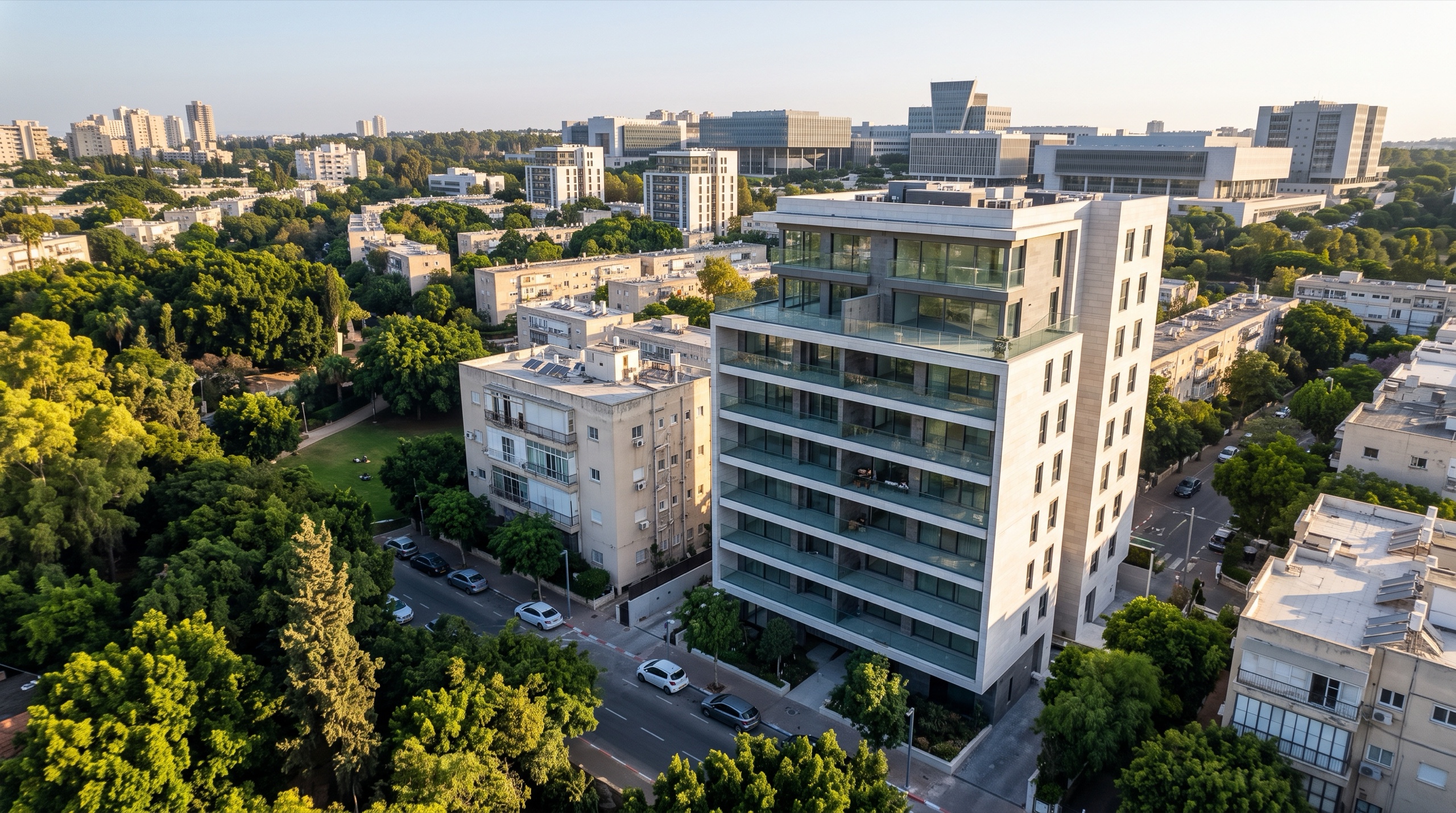
The reason for the gap between old and new is urban renewal. The original apartments in the neighborhood are relatively small, 54 to 80 sqm, and the new projects replace them with large apartments with a safe room, an elevator and parking:
For buyers this means two different ways into the neighborhood: an apartment in an older building, sometimes with renewal potential that is already in process, or a new apartment in a completed project. In both cases it is important to check the status of the plan, the agreements in the building and the actual timeline.
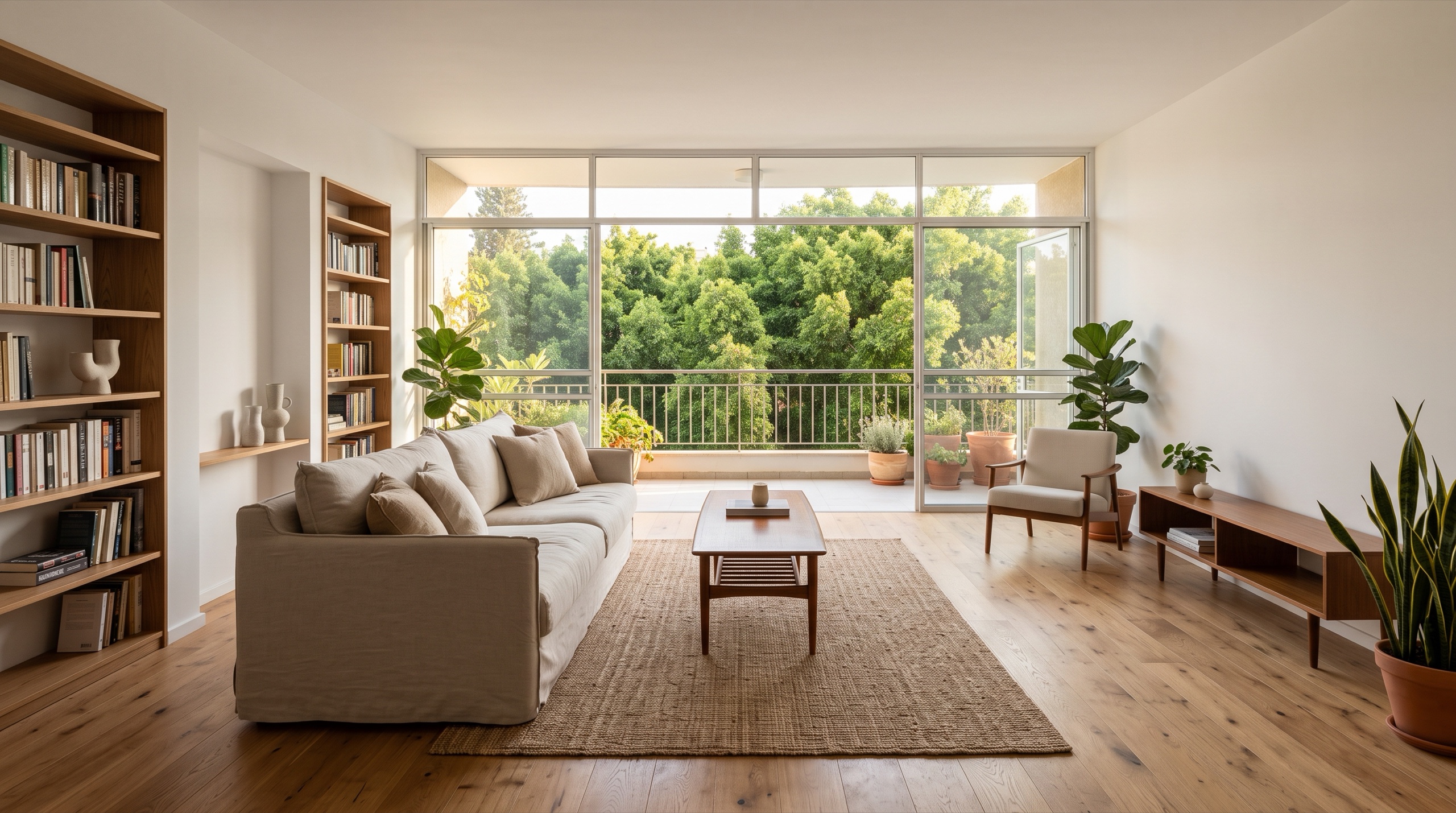
The properties for sale in Ramat Aviv HaYeruka fall into three types: original apartments of 54 to 80 sqm in older buildings, large apartments with a safe room, an elevator and parking in completed projects, and private homes that are offered only rarely. The proximity to the university also makes the neighborhood relevant for anyone looking for apartments for rent in Ramat Aviv HaYeruka, and anyone considering an investment apartment in the neighborhood should start with the renewal stage of the building.
Data sources: Bizportal (September 2026), ynet (July 2025), Globes, Merkaz HaNadlan, Calcalist, Tel Aviv Online, Tel Aviv-Yafo Municipality (Statistical Yearbook 2024, urban fabric documentation file for Ramat Aviv Aleph). The figures are neighborhood averages and do not replace a valuation of a specific property.
Our valuation calculator combines real deals in the neighborhood with the features of your property, and gives you an estimate within a minute, free and with no commitment.
Get a free valuation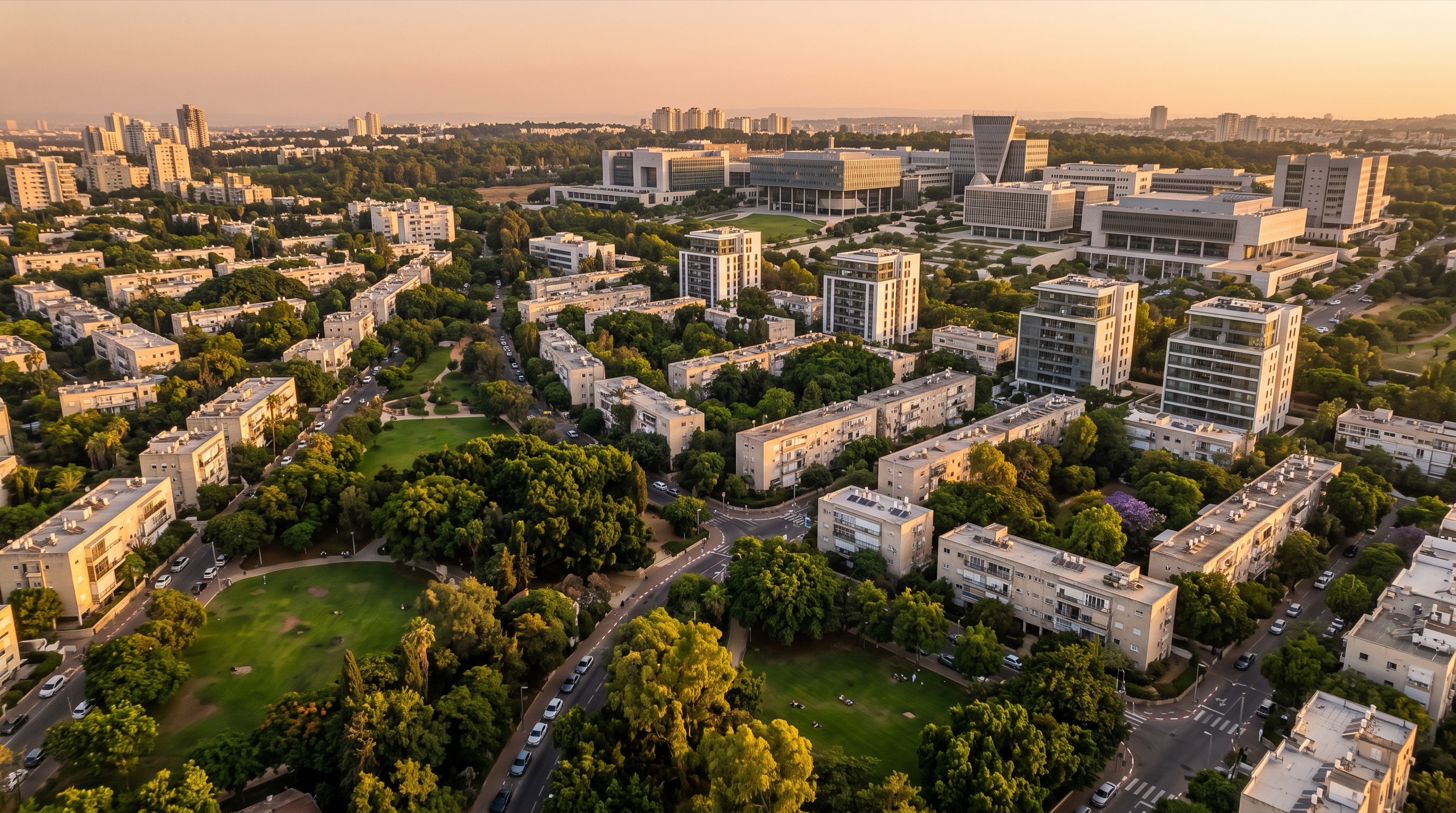
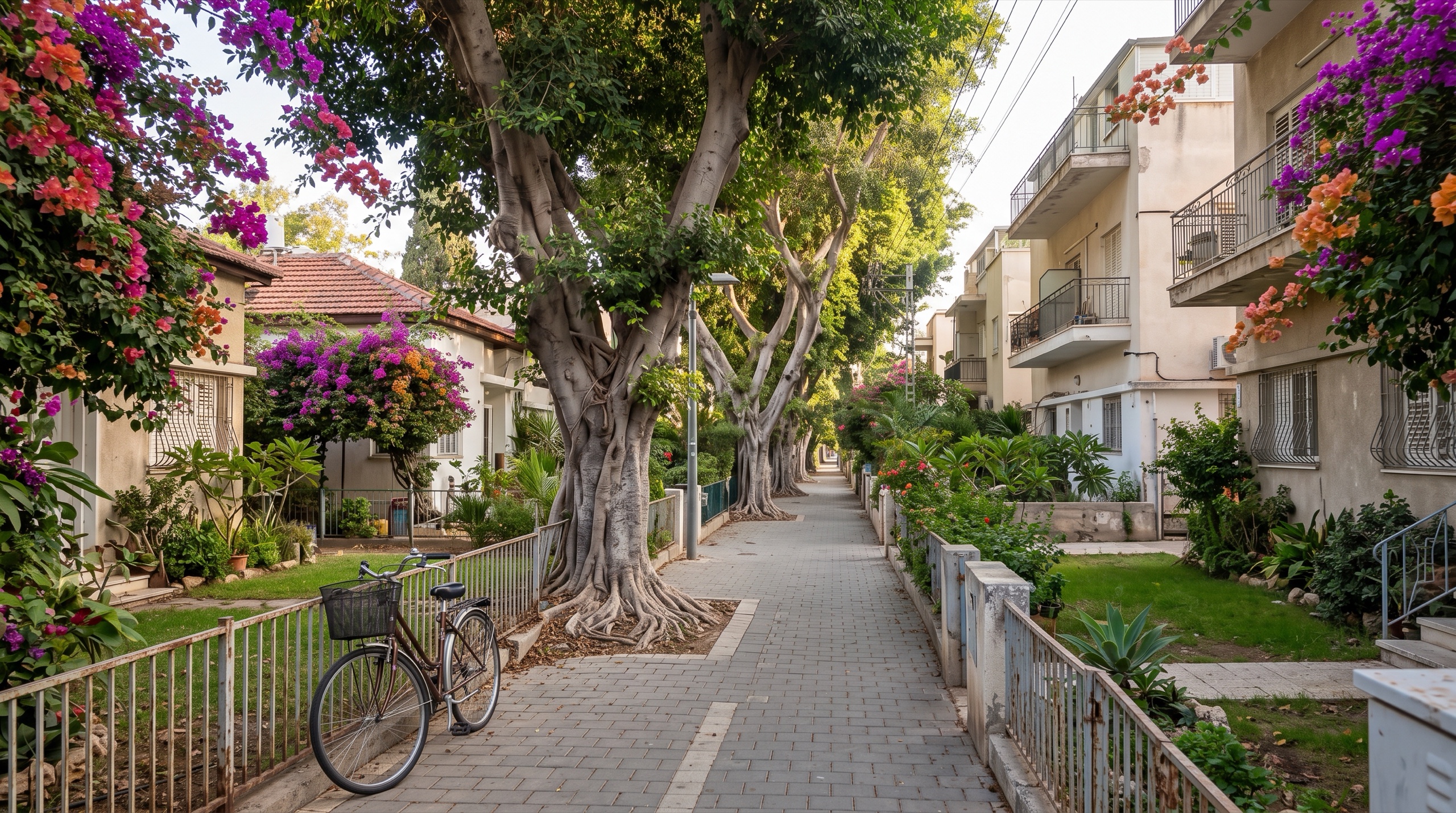
* Images for illustration only (renderings).

In Ramat Aviv HaYeruka, two adjacent buildings can be in two different worlds: one has already signed for Pinui Binui and will become an 8 story building, and the other stays as it is. The size of the original apartment, the location of the building relative to the future Green Line and Metro stations, and the actual stage of the plan determine the value more than any other detail.
RS Nadlan has worked in the Golden Triangle neighborhoods since 2015, follows every renewal project in the neighborhood, and holds a unique property database, including properties that are not advertised on listing sites. We guide buyers and sellers from the first meeting to the handing over of the keys.
That is why a broker in Ramat Aviv HaYeruka needs to read not only the apartment but also the building: what stage the plan is at, which agreements have already been signed and what that means for the price. With us, real estate brokerage in Ramat Aviv HaYeruka covers selling, buying and renting, a valuation based on real deals, and selling an apartment with a broker who shows buyers the full picture, from the original 54 sqm apartment to the apartment in a completed project. If you are comparing the Ramat Aviv neighborhoods, you will also find details on the real estate agency in Neve Avivim page.
For property owners we build a plan of exclusive brokerage in Ramat Aviv HaYeruka, with targeted marketing and exposure to buyers through our database of Off Market properties, and to those who are searching we present apartments for sale in Ramat Aviv HaYeruka in older buildings and new projects alike.
According to Bizportal (September 2026), the average price is about ₪59,800 per sqm. A resale 4 room apartment closes at around ₪4.55 million, and in new construction at around ₪5.75 million. The price varies greatly with the size of the apartment, the condition of the building and the stage of renewal.
Ramat Aviv HaYeruka is older, dating from the early 1950s, with low rise construction of up to four stories and wide lawns, and it sits right next to the university and the museums. Ramat Aviv Gimel was built in the 1970s and 1980s, with taller buildings and residential towers. Both are part of the Golden Triangle of North Tel Aviv.
Four elementary schools: Ramat Aviv at 83 Feinstein, Ilanot at 11 Groniman, Alonim at 47 Reading and the public religious Alumot at 35 Reading. The Ironi Yud Alliance six year high school is at 26 Reading, and the neighborhood has 11 municipal kindergartens.
There are several large projects at different stages: Brazil and Leon Blum (475 apartments), Karnei Yehuda and Shimoni (420 apartments), 33 to 39 Brodetsky (168 apartments), Aviv BeReading and 27 and 29 Shimoni. Before buying in an older building, it is worth checking whether it is included in a plan and what the status of that plan is.
The RS Nadlan offices are at Kashani 3G, Ramat Aviv Gimel, Tel Aviv, a few minutes’ drive from Ramat Aviv HaYeruka. Visits by appointment only. You can leave your details in the form at the bottom of the page, and a real estate advisor will get back to you for an introductory call and more details.
It is worth choosing someone who knows the streets in depth, from Brodetsky and Reading to Shimoni and Brazil, and who knows what stage each renewal project is at. Ask for pricing based on real deals and not on listing prices, a written marketing plan for the exclusivity period and a transparent commission agreed in advance. A real estate agency in Ramat Aviv HaYeruka also needs to be available, respond quickly to inquiries and know the buyers who are searching in the neighborhood. Before signing, it is also worth checking the broker’s license.