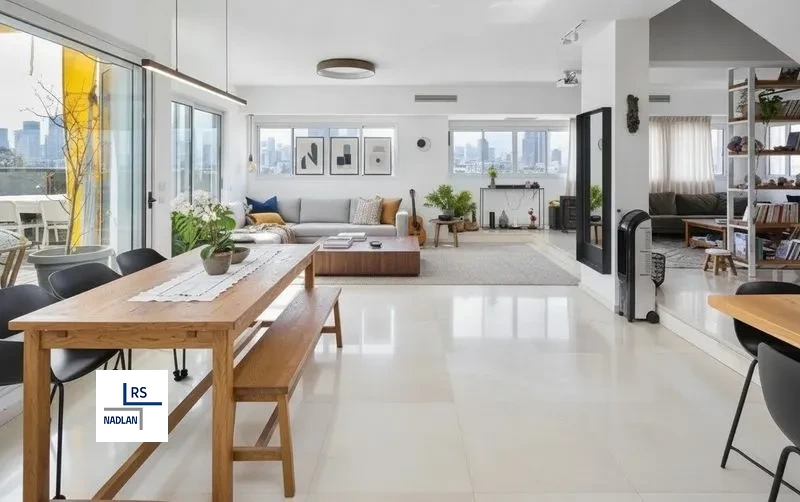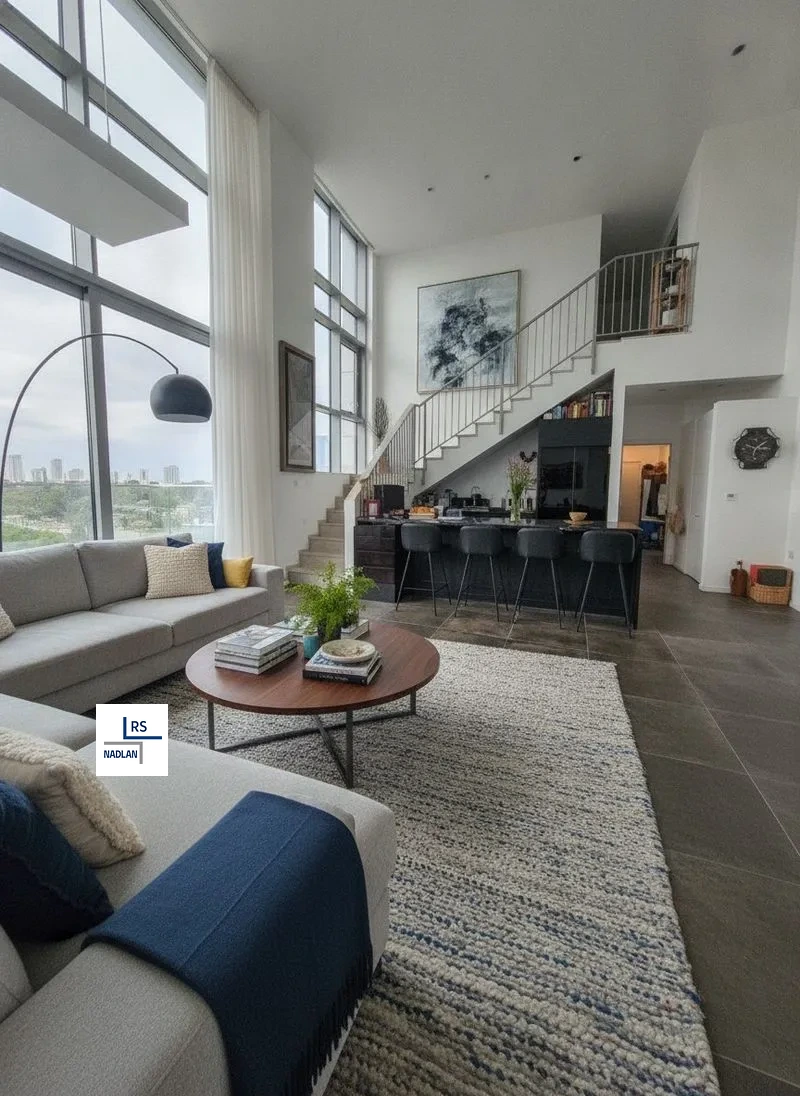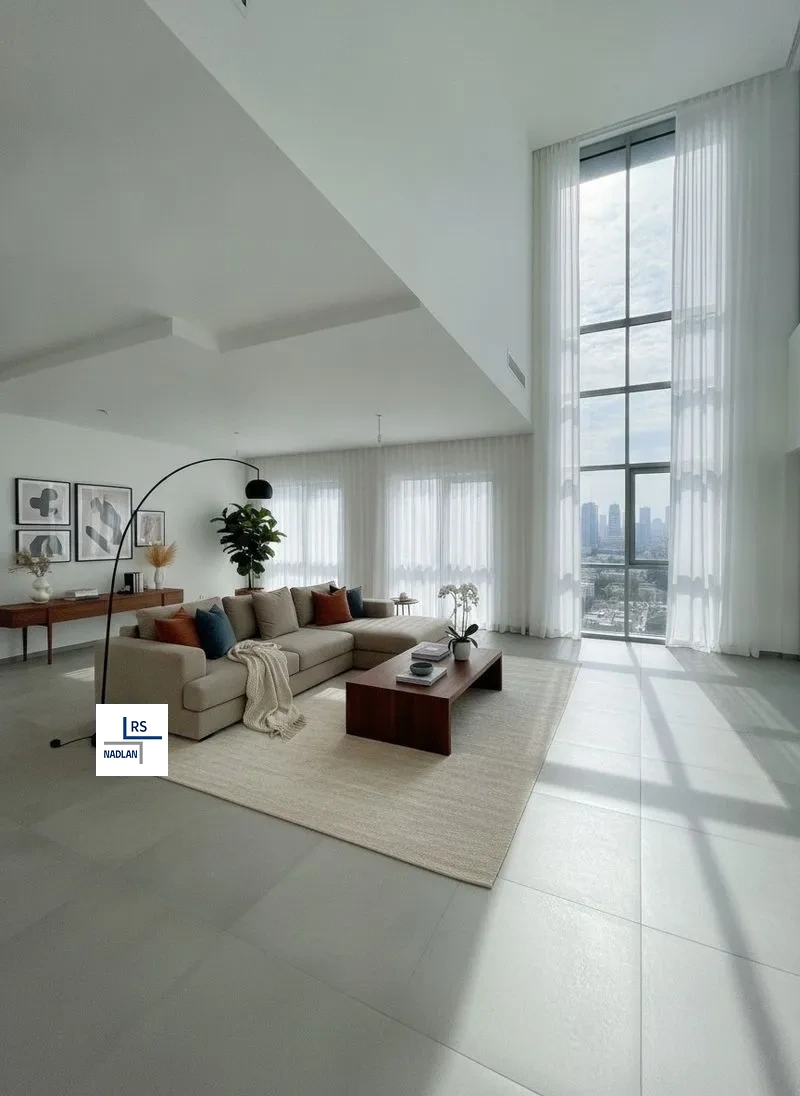


Anyone looking at apartments for sale in Lamed, Tel Aviv quickly discovers that the name covers two layers of construction within the same neighborhood: the original Lamed neighborhood (Shikun Lamed), built in the 1970s along Yehuda Burla, Bareli and Yaakov Apter streets, and New Lamed (Lamed HaHadasha), a strip of five to twelve storey buildings completed over the past decade on Yehuda Amichai, Isaac Stern and Prof. Yuval Ne’eman streets. Apartments for sale in New Lamed and apartments in the neighborhood’s older buildings differ in building age, in the safe room (mamad), in parking and in urban renewal potential, yet the price per square meter is closer between them than many people assume. In this guide we have gathered what matters before you make an offer: how the neighborhood is laid out, what apartments have sold for in registered transactions, what to check in each type of building, and how the new Sde Dov district and the Green Line may affect it.
Resale apartments in Lamed sold in registered transactions from January 2024 through July 2026 at a median price of about ₪5,000,000, or about ₪46,100 per square meter. In New Lamed the median price per square meter was about ₪47,700, and in the older buildings about ₪45,200.
- The gap between new and older buildings is relatively small, so the decision should rest on the building itself rather than on the name of the part of the neighborhood.
- Apartments in the 1970s buildings are relatively large, four and five rooms of about 100 to 115 square meters, and usually have no safe room.
- In New Lamed the buildings are young, with a safe room, an elevator and parking, and some of the developer’s warranty periods may still be in force.
- The Sde Dov district and the Green Line are expected to change the area, but the timelines are long, and it is wise to price according to what exists today.
Lamed and New Lamed: two building eras in one neighborhood
The Lamed neighborhood, also called Lamed or Tochnit Lamed (Plan Lamed), lies in northwest Tel Aviv. It began with a January 1964 decision by the Israel Lands Administration to sell about 1,600 dunams in the area to a partnership of the government, the Tel Aviv Municipality and the major banks, and the neighborhood itself was first occupied in the early 1970s. One explanation for its name is the layout of its streets, which form the shape of the Hebrew letter lamed.
The boundaries, as they are usually described: Einstein Street and New Ramat Aviv (Ramat Aviv HaHadasha) to the north, Namir Road and Ramat Aviv to the east, Shai Agnon Street and Kokhav HaTzafon to the south, and Sde Dov to the west. For a buyer, the internal division matters more:
- Old Lamed: Yehuda Burla, Bareli, Yaakov Apter and part of Levi Eshkol. Buildings of four to eight floors from the 1970s, alongside a few taller buildings from the 1990s.
- New Lamed: Yehuda Amichai, Isaac Stern and Prof. Yuval Ne’eman, west of Levi Eshkol Boulevard. Buildings of five to twelve floors, built between 2012 and 2022 according to the transaction data, with elevators, underground parking, garden apartments and penthouses.
In the Israel Tax Authority transaction database and on GovMap, both parts are registered together under the official name “Tochnit Lamed”, while listing sites sometimes assign addresses on the western edge to Nofei Yam. When reviewing comparable sales, make sure the address is assigned to the correct neighborhood, and compare new buildings with new buildings and older buildings with older buildings. A broader comparison of the surrounding neighborhoods is on our north Tel Aviv neighborhoods page, and a general overview of the area is on the Lamed neighborhood page.
Prices of apartments for sale in Lamed, Tel Aviv based on registered transactions
RS Nadlan analyzed the resale apartment transactions registered in the neighborhood from January 2024 through July 2026, by address and year of construction. We excluded transactions registered without a full address and without a construction year. Many of them appear to be developer sales in new projects registered under the neighborhood name, and they were recorded at a much higher median price per square meter, so including them would have distorted the picture of the resale market. The result: 78 transactions, a median price of about ₪5,000,000 and a median of about ₪46,100 per square meter.
| Apartment type in Lamed | Median size | Median price | Number of transactions |
|---|---|---|---|
| Three rooms | About 82 sq m | About ₪3,240,000 | 9 |
| Four rooms | About 103 sq m | About ₪4,900,000 | 35 |
| Five rooms | About 120 sq m | About ₪5,625,000 | 29 |
Separating the two parts, Old Lamed recorded 55 transactions at a median of about ₪45,200 per square meter, and New Lamed 23 transactions at a median of about ₪47,700 per square meter, with a median apartment price of about ₪5,440,000. The gap per square meter is small, but apartments in New Lamed are larger: five room apartments sold there had a median size of about 143 square meters, and their median price reached about ₪8,350,000. These are only nine transactions, so treat the figure as an order of magnitude rather than a price list.
For comparison, over the same period and using the same method, the median price per square meter was about ₪49,400 in Ramat Aviv Gimel, about ₪49,300 in New Ramat Aviv, about ₪52,800 in Kokhav HaTzafon and about ₪61,200 in Bavli. In other words, Lamed sells at a small discount to its neighbors to the north and south, and at a significant discount to Bavli. Buyers who also want to compare a younger neighborhood on the other side of Route 20 will find the details in our guide to apartments for sale in Tel Baruch.
Apartments for sale in New Lamed: what to check in a young building
In a building completed within the past decade, the checks differ from those for a 1970s building. The central question is not urban renewal but construction quality, registration status and running costs.
- Condominium registration: in relatively new buildings the condominium (bayit meshutaf) is sometimes not yet registered at the Land Registry (tabu), and the rights are recorded with the housing company or the Israel Land Authority. This does not rule out a deal, but it changes the documents, the mortgage process and the timeline.
- Attached rights: parking, storage, a roof terrace or a yard should appear in the plan and the specification, and in a registered condominium also in the land registry extract.
- Defects and the developer’s warranty: under the Sale (Apartments) Law, inspection periods run from one to seven years from delivery, depending on the type of defect. In a building five or six years old, some of them may still be in force. Ask the seller for the handover protocol and the correspondence with the developer, and a lawyer should check whether these rights pass to the buyer in the specific case.
- Building committee: in buildings with a lobby, elevators, a parking garage and landscaping, the committee fees are higher than in an older building. Ask what they actually are and what the reserve fund looks like.
- Orientation and floor: on the western edge of New Lamed some apartments have an open view to the west, which may change once the Sde Dov district is built. A buyer paying for a view should check what is planned opposite it.
The full list of checks before buying, including the land registry extract, the building file and building violations, is in our guide to checks before buying an apartment.
An apartment in a 1970s building: space, safe rooms and urban renewal
The older buildings in Lamed were designed generously for their time. According to the registered transactions, a four room apartment in a 1970s building in the neighborhood has a median size of about 100 square meters, and a five room apartment about 114 square meters. That is space that is hard to find at the same price in a new building in the north of the city.
What an older building lacks
Buildings permitted before the early 1990s were generally built without an in apartment safe room, and some without designated parking for every apartment. Most of the taller buildings have an elevator, but not all of them. Before making an offer, check the condition of the plumbing, waterproofing and facades, and whether the building committee has approved works whose cost will also fall on the buyer.
What are the chances of urban renewal
Demolition and reconstruction projects are already being promoted in individual buildings in the neighborhood, for example on Yehuda Burla Street. However, TAMA 38 no longer applies in Tel Aviv, and the municipal plan TA/5555 that is meant to replace it has not yet taken effect, so many buildings have no clear path today. Anyone buying an apartment in an older building should price it for what it is today, and see renewal as a future possibility rather than part of the price. If the building has already signed an agreement with a developer, read it before making an offer, because it determines what the apartment will receive and when. The overall picture of the different tracks is in our guide to urban renewal in 2026.
Older building or new building: a worked example
For illustration only: a family is weighing two four room apartments in Lamed. The first is in a 1970s building on Bareli Street, about 100 square meters, priced at ₪4,575,000, the median for such an apartment in Old Lamed in 2024 to 2026 transactions. The second is in a 2018 building on Yehuda Amichai Street, about 114 square meters, priced at ₪5,000,000, the median for four room apartments in New Lamed over the same period.
| Example assumptions | Older building | New building |
|---|---|---|
| Price | ₪4,575,000 | ₪5,000,000 |
| Full renovation, assumed for the example | ₪450,000 | None |
| Total before taxes and transaction costs | ₪5,025,000 | ₪5,000,000 |
| Safe room and parking | Usually not | Yes |
| Urban renewal potential | Possible, not certain | Not relevant |
After renovation, both options arrive at a similar cost. The new building offers a safe room, parking and 14 additional square meters, while the older building offers a future renewal option and lower committee fees, and in return demands time, a renovation budget and patience. The right answer depends on the family’s priorities, not on a rule of thumb. If this is not the buyer’s only apartment, purchase tax (mas rechisha) changes the math; the brackets are set out in our guide to purchase tax in 2026. A lawyer or tax advisor should review the specific case.
Rents and yield in Lamed
According to the open rental data on the government real estate website, median rents in the neighborhood in the months before June 2026 were about ₪8,900 a month for a three room apartment, about ₪11,000 for a four room apartment and about ₪13,650 for a five room apartment.
An investor who buys a four room apartment for ₪4,900,000 and rents it out for ₪11,000 a month will earn annual income of ₪132,000, a gross yield of about 2.7%. After purchase tax, transaction costs, vacancy periods and maintenance, the net yield is lower. As in most of north Tel Aviv, investing in the neighborhood rests mainly on long term preservation of value rather than on monthly cash flow. The full calculation, including financing and taxation, is in our guide to investing in an apartment in Tel Aviv.
Living in the neighborhood: schools, the country club and transportation
On Yehuda Burla Street you will find the Zalman Aran state elementary school and the municipal Country Lamed sports club, and the neighborhood has municipal kindergartens on Burla and Bareli streets. School enrollment zones are set by the Tel Aviv Municipality and change from time to time, so a family choosing an apartment for a particular school should check the enrollment zone of the exact address before making an offer.
In New Lamed the municipality has in recent years carried out a public space improvement project on Yuval Ne’eman, Isaac Stern and Yehuda Amichai streets. Everyday shopping is in and around the neighborhood, and for larger shopping trips residents drive to Ramat Aviv. For transportation, the neighborhood relies on Namir Road and Einstein Street, and the Tel Aviv University railway station is a short drive away.
The major change is expected to come with the Green Line of the light rail, which was planned to pass through the area with stations such as Levi Eshkol, Country Lamed and Shikun Lamed. According to targets published by the Ministry of Transport and NTA, the southern section of the line is due to open at the end of 2028, and the northern section to Herzliya only in 2030. In infrastructure projects of this kind timelines tend to shift, so it is wise to see the light rail as a future advantage rather than pay for it today.
Sde Dov and the new district: what it means for buyers in Lamed
West of the neighborhood, on the site of the closed airport, a new residential district is being built. In February 2025 the Israel Land Authority announced the winners of the tender for the center of the Sde Dov district, for 2,606 housing units in seven compounds, and in March 2025 the winners of the tenders in the northern part of the district, for about 2,750 additional housing units. Altogether, the plans for the area include about 16,000 housing units.
For buyers in Lamed this has two implications. On one hand, the district is expected to add public institutions, retail and open spaces within walking distance. On the other, it will add a large supply of new apartments, along with years of construction and heavy traffic on the western side of the neighborhood. For apartments with an open view to the west, check in the plans what will be built opposite them. Bottom line: it is wise to price an apartment in Lamed according to what exists today, and to see the development at Sde Dov as a possibility rather than a promise.
Frequently Asked Questions
What is the difference between Lamed and New Lamed?
The original Lamed neighborhood was built in the 1970s, mainly on Yehuda Burla, Bareli and Yaakov Apter streets. New Lamed is the western part, on Yehuda Amichai, Isaac Stern and Prof. Yuval Ne’eman streets, with buildings completed over the past decade. In the official transaction database and on GovMap both are registered together under the name “Tochnit Lamed”.
How much does an apartment in New Lamed cost?
In resale transactions registered from January 2024 through July 2026, the median price in New Lamed was about ₪5,440,000, or about ₪47,700 per square meter. Large five room apartments there also sold for more than ₪8,000,000. The price of a specific apartment depends on the floor, orientation, size and attached rights.
Do apartments in Lamed have a safe room?
Buildings in New Lamed, completed over the past decade, usually have a safe room (mamad). The 1970s buildings usually do not, and instead have a shelter in the building or a public shelter nearby. Verify this in the building permit and the plan rather than relying on the listing.
Will the older buildings in the neighborhood undergo urban renewal?
Projects are already being promoted in some buildings, but there is no uniform path for the whole neighborhood. TAMA 38 no longer applies in Tel Aviv, and the municipal plan meant to replace it has not yet taken effect. Each building therefore has to be examined on its own merits.
How will the Sde Dov district affect apartment prices in the neighborhood?
No one can know for certain. The district may add services and open spaces to the area, and it will also add a large supply of new apartments and years of construction. The timelines there are long, so it is wise to price an apartment in Lamed according to what exists today.
Looking at apartments for sale in Lamed, Tel Aviv
In Lamed the important decision is which building suits you, and only then which apartment. RS Nadlan accompanies buyers in Tel Aviv, Ramat HaSharon, Herzliya, Ra’anana and Kfar Saba, with a specialization in the neighborhoods of north Tel Aviv, from defining the type of property through to the offer, based on registered comparable sales. We would be happy to help: you can contact us or call 077-500-4600 (from abroad, +972 77 500 4600).