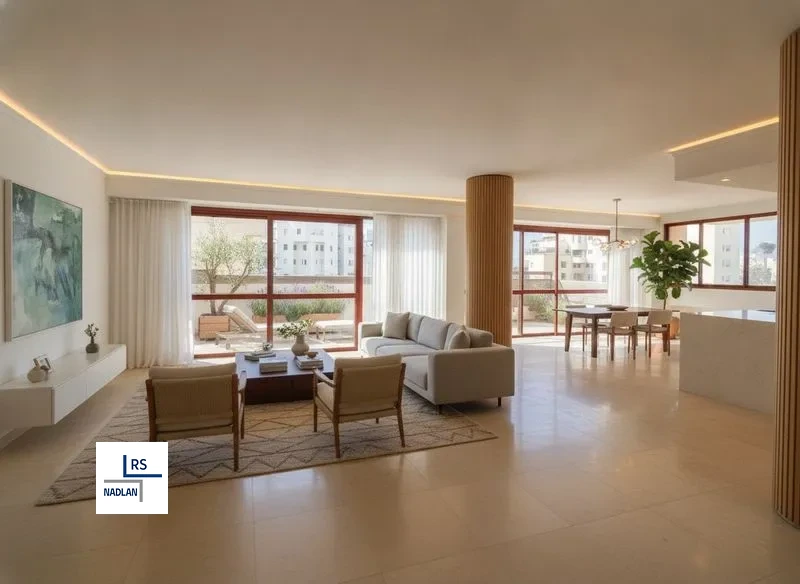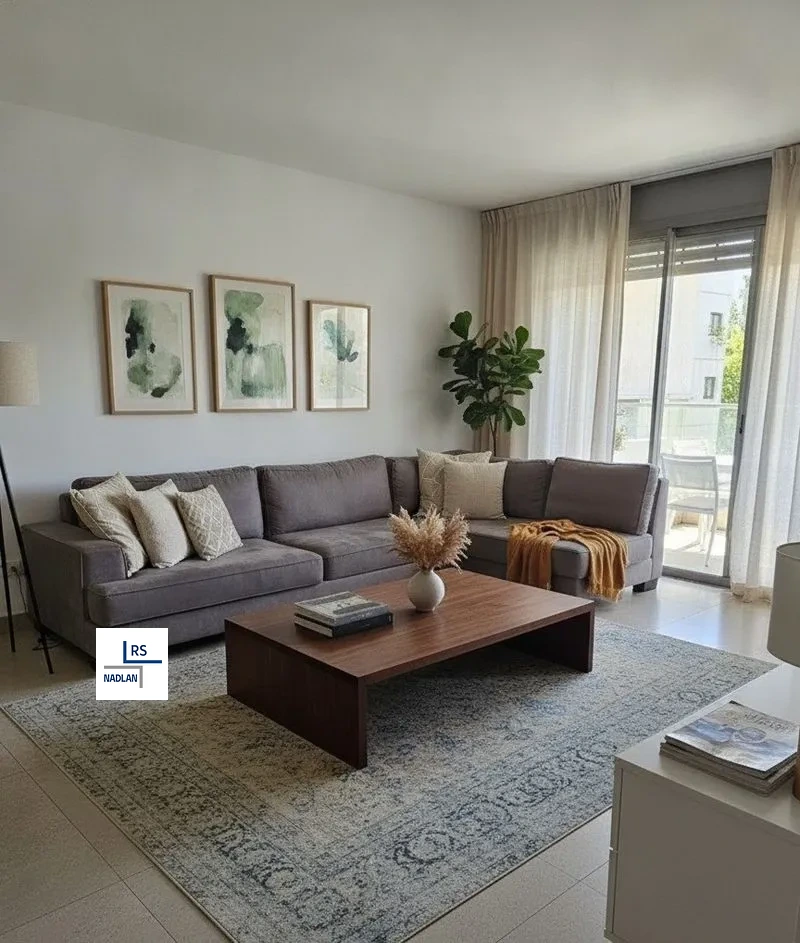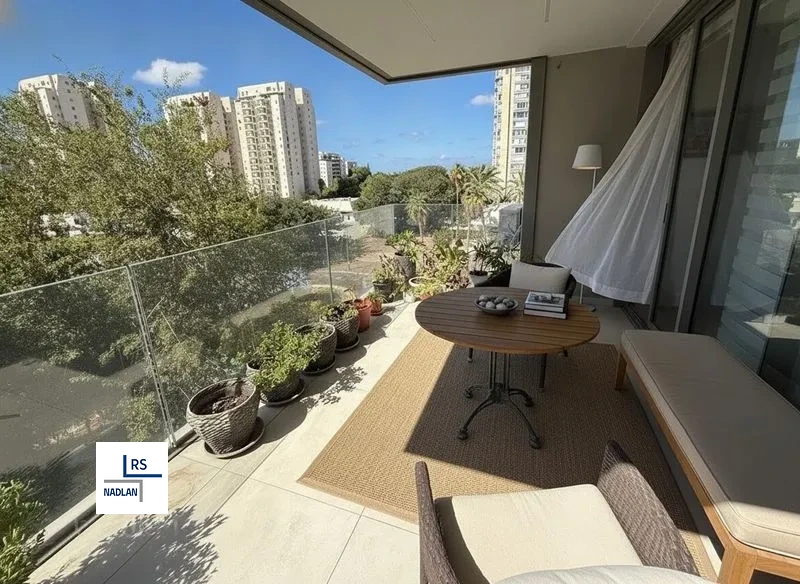


Anyone looking at apartments for rent in north Tel Aviv meets a market where the good apartments go quickly, and a decision made in an hour can bind you for a year, sometimes for three. Apartments for rent in north Tel Aviv draw families who want to get to know the neighborhood before buying, university faculty, tech professionals and returning residents, so the tenant who arrives prepared, with documents and a clear checklist, is usually the one who gets the apartment, and on better terms. This guide is written for tenants: what to check in the apartment and the building, how to confirm who the landlord really is, what the Fair Rental Law (hok hasechirut hahogenet) says about the lease and the security, who pays for what, and how much money to have ready on signing day. The figures are accurate as of November 2026, and any legal question about a specific lease is best reviewed by a lawyer.
A good rental in north Tel Aviv is decided before signing: checking the apartment and the building, confirming that the landlord is the owner or someone authorized to act on the owner’s behalf, and a lease that complies with the Fair Rental Law. The law caps the security, requires defects to be repaired on time and defines which expenses may not be passed on to the tenant.
- For a lease longer than three months with rent of up to about ₪20,000 a month, monetary security is capped at the lower of three months’ rent or one third of the rent for the entire term.
- The security is returned within 60 days of the apartment being handed back or the debts being settled, whichever is later.
- Building insurance and the brokerage fee of an agent who acted for the landlord are not the tenant’s to pay.
- An ordinary defect is repaired within 30 days at most, and a defect that prevents reasonable living within three days.
- A land registry extract (nesach tabu), a handover report with photos and meter readings prevent most disputes at the end of the term.
Apartments for rent in north Tel Aviv: what the market looks like and who you are competing with
Demand in the north of the city comes from several groups at once, and each is looking for something different. Families want to be close to schools and kindergartens in Ramat Aviv Gimel, Neve Avivim, Bavli and Tzahala, and a long lease with an option. Faculty and graduate students look for proximity to Tel Aviv University and a furnished apartment for a year. Tech professionals check the commute to the main roads and train stations. Residents returning from abroad usually want an apartment they can move into right away.
What this means for a tenant: the owner of a good apartment chooses among several candidates, and not always by price. The owner asks about stability, the number of occupants, pets and the planned length of stay. A tenant who arrives with pay slips or proof of income, a reference from a previous landlord and a clear answer on the security they can provide looks more serious than someone offering a few hundred shekels more a month.
It also helps to understand the seasons. Toward the end of summer and the start of the school year, demand from families and academics rises, and in those months good apartments are sometimes taken within days. Anyone flexible on the move in date can sometimes find more options in the winter months.
What to check in apartments for rent in north Tel Aviv before you fall in love
A viewing lasts a quarter of an hour, and the lease lasts a year. So it pays to arrive with a fixed checklist and go through it in every apartment, even when the first impression is excellent:
- Systems: water pressure in the shower and the kitchen, a solar or electric water heater and its age, air conditioners in every room and whether they work, a tidy electrical panel, enough outlets in the kitchen.
- Damp and mold: stains on bathroom ceilings, in bedroom corners and behind closets. In older buildings in Ramat Aviv and Neve Avivim this check matters especially in winter.
- Safe room or shelter: whether there is a safe room (mamad) in the apartment, a shared safe room on the floor or a shelter in the building, and how far away it is.
- Parking and storage: whether the parking space is attached and registered to the apartment or shared on a first come, first served basis, and whether the storage room is included in the rental.
- Noise and light: visit a second time at a different hour, for example in the evening or during a busy morning, and check the street, any nearby road and construction work in the area.
- Elevator and accessibility: in three and four story buildings without an elevator, the floor changes your quality of life, especially with small children.
Another check people tend to skip is whether the apartment is legal. An apartment split off from a larger one, a basement unit or a rooftop room without a permit can cause problems: the planning and building committee can demand that the original state be restored, and in such cases the tenant is caught in the middle. It is enough to ask the landlord whether the apartment matches the permit, and to ask to see the registry extract and the floor plan when something looks unusual.
Who is the landlord really: land registry extract, power of attorney and mortgage
Before transferring any money, confirm that the person signing is the owner of the apartment or someone authorized to sign on the owner’s behalf. The simple way is a land registry extract (nesach tabu), which you can obtain on the Land Registry’s government website for a nominal fee using the block and parcel numbers. The Fair Rental Law in any case requires the lease to state the address and the block and parcel numbers, so the request is entirely natural.
- If the names on the extract differ from the name of the person signing, ask for the document that authorizes them: a power of attorney, an inheritance order or probate order, or an agreement with the other owners.
- When there are several owners, for example spouses or heirs, it is better for all of them to sign or for there to be written authorization from all of them.
- A mortgage registered on the apartment is common and is no reason to give up on it. It is, however, a reason to ask a simple question about the status of the payments, and to make sure the lease addresses what happens if the apartment is sold.
- When renting through a management company or an agent, check that they hold written authorization from the owner and that the money goes to an account the owner has approved.
If the owner sells the apartment during the lease, the lease is not canceled: the buyer steps into the landlord’s shoes and takes on the landlord’s rights and obligations, and the landlord must notify the tenant in writing of the date and the buyer’s details. We covered the owner’s side in more detail in our guide to selling a rented apartment and tenant rights.
The lease from the tenant’s side: what the Fair Rental Law requires
The 2017 amendment to the Rental and Borrowing Law, known as the Fair Rental Law, applies to most ordinary residential leases: a term of more than three months and up to ten years, and rent of up to about ₪20,000 a month. In the areas it regulates, the tenant’s rights cannot be waived to the tenant’s detriment, even if the lease says otherwise. For rent close to that ceiling or above it, which is not unusual for large apartments and houses in the north of the city, a lawyer should check which provisions of the law apply.
The apartment must be fit for habitation
The landlord must hand over an apartment fit for habitation. The schedule to the law sets out the minimum: working water supply and drainage, electricity and lighting, ventilation openings and natural light, doors and windows that close, a front door that locks, separation between the toilet and the rest of the apartment, and no unreasonable risk to health or safety. An apartment that does not meet this minimum is not “a matter of taste”, and it gives the tenant rights under the law.
What the lease must include
- The address of the apartment and the block and parcel numbers.
- The names of the parties, ID numbers and addresses.
- A description of the apartment, including furniture and appliances, and attached features such as parking and storage.
- Defects that are not negligible and are known on the day of signing.
- The lease term, the option and its terms, and the termination terms.
- The rent, payment dates and method of payment.
- The additional payments the tenant bears, and the payments the tenant does not bear.
Three clauses worth reading twice: indexation (whether the rent is linked to the consumer price index and when it is updated), rent during the option period (a fixed amount or a known formula is better than “to be agreed between the parties”), and the early termination clause. When the lease allows early termination without a breach, the landlord must give at least 90 days’ notice and the tenant at least 60 days. The landlord may enter the apartment at a reasonable time, with advance coordination and only to inspect or repair.
Rental guarantees and deposits: the cap, the refund and what may be drawn
The security is the point where most tenants feel they have no bargaining power, and this is exactly where the law is clear. Security that involves a monetary outlay by the tenant, such as a cash deposit or a bank guarantee, is capped at the lower of two amounts: three months’ rent, or one third of the rent for the entire lease term. The amount is assessed cumulatively, meaning a landlord cannot demand both a full deposit and a full bank guarantee.
| Type of security | Counts toward the cap | What to know |
|---|---|---|
| Deposit in cash or by transfer | Yes | Returned with any return it has earned, within 60 days of the apartment being handed back or the debts being settled. |
| Bank guarantee | Yes | The bank usually freezes an amount in your account and charges a fee. The bank pays on the landlord’s written demand, without examining who is right. |
| Promissory note with guarantors | No, when it involves no monetary outlay | The money stays with the tenant. Collection goes through the Enforcement and Collection Authority, where an objection can be filed. |
| Security check or personal guarantee | No, when it involves no monetary outlay | Commonly combined with another form of security. Make sure the amount and the conditions for drawing on it are written in the lease. |
The landlord may draw on the security in only four situations: unpaid rent, a repair that was the tenant’s responsibility and was not carried out, a permitted ongoing payment that was not paid, and an apartment not vacated on time. Even then, the landlord must give advance notice and a reasonable opportunity to remedy the matter. If 60 days have passed and the security has not been returned without good reason, the next step is a demand letter, and if there is no response, a small claims suit.
Brokerage fees on rentals and who pays for what
Most disputes between tenants and landlords are not about the rent but about the payments around it. The law sets a few clear rules, and the rest is determined by the lease:
| Payment | Who pays | Note |
|---|---|---|
| Arnona (municipal property tax), electricity, water and gas | The tenant | Transfer the accounts to the tenant’s name and notify the municipality of the change of occupant. |
| Routine building committee fees (va’ad bayit) | The tenant | Exceptional expenses such as a facade renovation, replacing the elevator or upgrading fixed systems are not the tenant’s, unless the tenant requested them and agreed to pay. |
| Building insurance | The landlord | Contents insurance and third party liability are the tenant’s matter, and the lease sometimes requires them. |
| Brokerage fees | Whoever engaged the agent | An agent who acted for the landlord does not charge the tenant. A tenant who engages an agent signs a written order, and the amount is set by agreement. |
| The lawyer who drafted the lease for the landlord | The landlord | A payment by the landlord to a third party is not passed on to the tenant. |
| Repair of defects and reasonable wear and tear | The landlord | An ordinary defect within 30 days at most, a defect that prevents reasonable living within three days. Damage from unreasonable use is the tenant’s responsibility. |
As for brokerage fees, the Real Estate Brokers Law provides that an agent is entitled to a fee only if the agent received a signed written order and was the effective cause of the transaction. The law sets no fixed amount. The norm in the rental market is one month’s rent plus VAT, but it is a matter of agreement. The full rules are in our guide brokerage fees: how much you pay and what the law says.
When a landlord does not repair a defect on time, the tenant may repair it after giving advance notice and be reimbursed for the reasonable cost, or receive a proportional reduction in rent for as long as the defect remains. Document every request, even with a short message, with a date and a photo.
How much money you need on signing day: a worked example from Ramat Aviv Gimel
The example is for illustration only, and its figures are not market prices for any specific apartment. Assume a four room apartment in Ramat Aviv Gimel, rent of ₪11,500 a month, a one year lease with an option for another year, and a tenant who engaged an agent and agreed on a fee of one month’s rent plus VAT.
- Monetary security cap: three months’ rent is ₪34,500. One third of a year’s rent (₪138,000) is ₪46,000. The cap is the lower of the two: ₪34,500.
- Brokerage fee: ₪11,500 plus 18% VAT comes to ₪13,570.
- First month’s rent: ₪11,500, and usually also checks for the remaining months of the term.
If the security is given as a cash deposit, the money leaving your account on signing day reaches ₪59,570, before movers and connecting the utilities. If the security is given as a bank guarantee, the amount stays in your account but is frozen, and a guarantee fee is added. Combining a smaller monetary security with a promissory note and guarantors is a common solution that reduces the money leaving your account, and it is worth proposing in the very first conversation.
At higher rents, for example a house in Tzahala or a large garden apartment, the law may not apply to the security, and then everything is decided by negotiation. This is where a lawyer’s review before signing is worth its cost.
Move in day, the option and moving out
Most disputes at the end of a rental year concern the condition of the apartment, and most of them are prevented on move in day. Do three things at the handover:
- Handover report: a list of every room, existing defects, furniture and appliances, with photos and a short video, signed by both parties.
- Meter readings: electricity, water and gas, with a photo of each meter and the date.
- Transfer of accounts: arnona at the municipality, the electricity account and the city water utility account in the tenant’s name, from the move in date.
As for the option, what governs is what the lease says: the deadline for the tenant to give notice of exercising it, the rent for the additional period and the termination terms. A landlord who wants to extend or change terms must give notice at least 90 days before the end of the term. Set a calendar reminder four months before the lease ends, and decide in good time whether you are staying.
When moving out, return the apartment in the condition in which you received it, subject to reasonable wear and tear, do another report with photos, record final meter readings and request the return of the security in writing. A tenant who plans to stay in the area and buy can use the rental year to get to know the neighborhoods of north Tel Aviv and the differences between them, as well as neighboring Ramat Hasharon.
Frequently Asked Questions
How large a deposit may a landlord demand on a rental?
For a lease longer than three months with rent of up to about ₪20,000 a month, monetary security is capped at the lower of three months’ rent or one third of the rent for the entire lease term. A cash deposit and a bank guarantee are counted together, and a promissory note that involves no monetary outlay does not count toward the cap.
How soon must the landlord return the deposit?
Within 60 days of the day the apartment was handed back, or of the day the tenant settled their debts, whichever is later, together with any return it has earned. The landlord may deduct only unpaid rent, a repair that was the tenant’s responsibility, an unpaid ongoing payment or an apartment not vacated on time, and only after advance notice.
Does a tenant have to pay a brokerage fee?
A tenant pays a brokerage fee only to an agent the tenant engaged, under a signed written order. When the agent acted for the landlord, the law provides that the tenant does not bear that agent’s fee. The amount is not fixed by law, and the norm is one month’s rent plus VAT.
Who pays the building committee fees and arnona in a rented apartment?
The tenant pays arnona, electricity, water, gas and the routine building committee fees. Exceptional building expenses, such as a facade renovation or replacing fixed systems, as well as building insurance, are the landlord’s responsibility, unless the tenant requested specific work and agreed to pay for it.
What can I do when the landlord does not repair a defect in the apartment?
Contact the landlord and document the request. An ordinary defect must be repaired within 30 days at most, and a defect that prevents reasonable living within three days. If the landlord does not repair it, the tenant may repair it after advance notice and be reimbursed for the reasonable cost, or receive a proportional reduction in rent.
Looking for a rental in the north of the city
At RS Nadlan we know the residential market in Tel Aviv, Ramat Hasharon, Herzliya, Ra’anana and Kfar Saba, with a specialization in the neighborhoods of north Tel Aviv, and we accompany many clients in renting and buying. Owners interested in the other side of the transaction will find our guide for owners renting out in north Tel Aviv. To talk about the apartment you are looking for, leave your details on our contact page or call 077-500-4600 (from abroad, +972 77 500 4600). We would be happy to help.