A moshav founded in 1947 in the Hof HaSharon Regional Council, about 4.5 km north of Raanana, with farm estates of 15 to 17 dunams, a community expansion, citrus orchards and a nature reserve
Bnei Zion is a moshav, a cooperative farming village, on the Sharon plain, about 4.5 km north of Raanana, within the Hof HaSharon Regional Council. Its first houses stand about 1 km west of Route 4, and its close neighbors are Batzra and Herutzim.
RS Nadlan is a real estate marketing and brokerage company active in Tel Aviv, Ramat HaSharon, Herzliya, Raanana and Kfar Saba, specializing in neighborhoods of private homes and luxury properties. We accompany buyers and sellers in Bnei Zion with complete discretion, including properties that are never publicly listed.
Bnei Zion is a moshav of large farm estates, most of them 15 to 17 dunams according to ynet, alongside the Shikun HaBanim homes and a community expansion. According to an appraiser quoted in 2024, a farm estate trades at about ₪20 to ₪35 million. For residential houses, three sales from 2024 and 2025 were included in our analysis, at a median of about ₪9.45 million; this is a very small sample.
Very few sales are recorded in Bnei Zion. Across three detached house sales reported in 2024 and 2025, the median was about ₪9.45 million and about ₪36,714 per m², close to the median for detached houses across Herzliya and below Herzliya Pituach. A complete farm estate is a different market: according to an appraiser quoted in ynet in 2024, about ₪20 to ₪35 million.
Medians of reported sales, January 2023 to July 2026; Bnei Zion has no sale in 2026 within this period. Two rows from July 2023 on Pereg Street, reported on the same day at the same address, were excluded from the median. Price per m² is based on the registered built area. A very small sample: the figures are an indication only, and no trend can be drawn from them.
According to an RS Nadlan analysis of reported sales in Bnei Zion, three detached house sales in 2024 and 2025 had a median of about ₪36,714 per m², close to the median for detached houses across Herzliya (₪36,675) and below Herzliya Pituach (₪43,860). The sample is very small and allows no conclusion.
Reported sales, after removing one duplicate record. The file contains no sale identified as a farm estate, so these figures are not suitable for pricing one. Updated October 2026.
What is your property worth based on sales in the moshav? Request a valuation ›
| Date | Street | Property type | Rooms | Price | ₪ per m² |
|---|---|---|---|---|---|
| 9.2025 | Harmesh | Detached house, 500 m² | Unreliable | ₪17.2 million | ₪34,400 |
| 4.2025 | Marva | Detached house, 216 m² | 6 | ₪9.45 million | ₪43,750 |
| 10.2024 | Anshei Bereshit | Detached house, 210 m² | 7 | ₪7.71 million | ₪36,714 |
| 7.2023 | Pereg | House, 200 m², reported in two rows | 6 | ₪8.92 million and ₪4.46 million | Not calculated |
All sales reported in Bnei Zion since January 2023 are houses, and none is a complete farm estate. After removing a duplicate record, five rows remain: two in 2025, one in 2024 and two on the same day in 2023. This is a very small sample, and no trend can be drawn from it.
All reported rows, newest first, after removing a duplicate record. Price per m² is based on the registered built area. Street names without house numbers. Israeli room counts include the living room. No asking prices in this section.
In Bnei Zion every property is different: a house in the expansion, a unit on a farm estate or a complete farm estate. A valuation based on reported sales, on the features of the property and on its rights, at no cost. And for buyers, discreet updates on properties that never reach the listings.
Bnei Zion lies on the Sharon plain, about 4.5 km north of Raanana and about 1 km west of Route 4. Batzra and Herutzim are close by, and the Bnei Zion nature reserve lies to the west of the moshav.
According to ynet, most farm estates (nahalot) in Bnei Zion exceed 15 dunams, usually 15 to 17 dunams, compared with about 10 dunams in neighboring Batzra. They hold large private houses alongside the farmland.
10 homes built between 1974 and 1978 and allocated by lottery among members of the moshav.
The expansion began in 1998, and in the early 2000s it brought young families and tripled the population. According to the regional council’s planning document, the moshav has two expansions, filling the land between the plots.
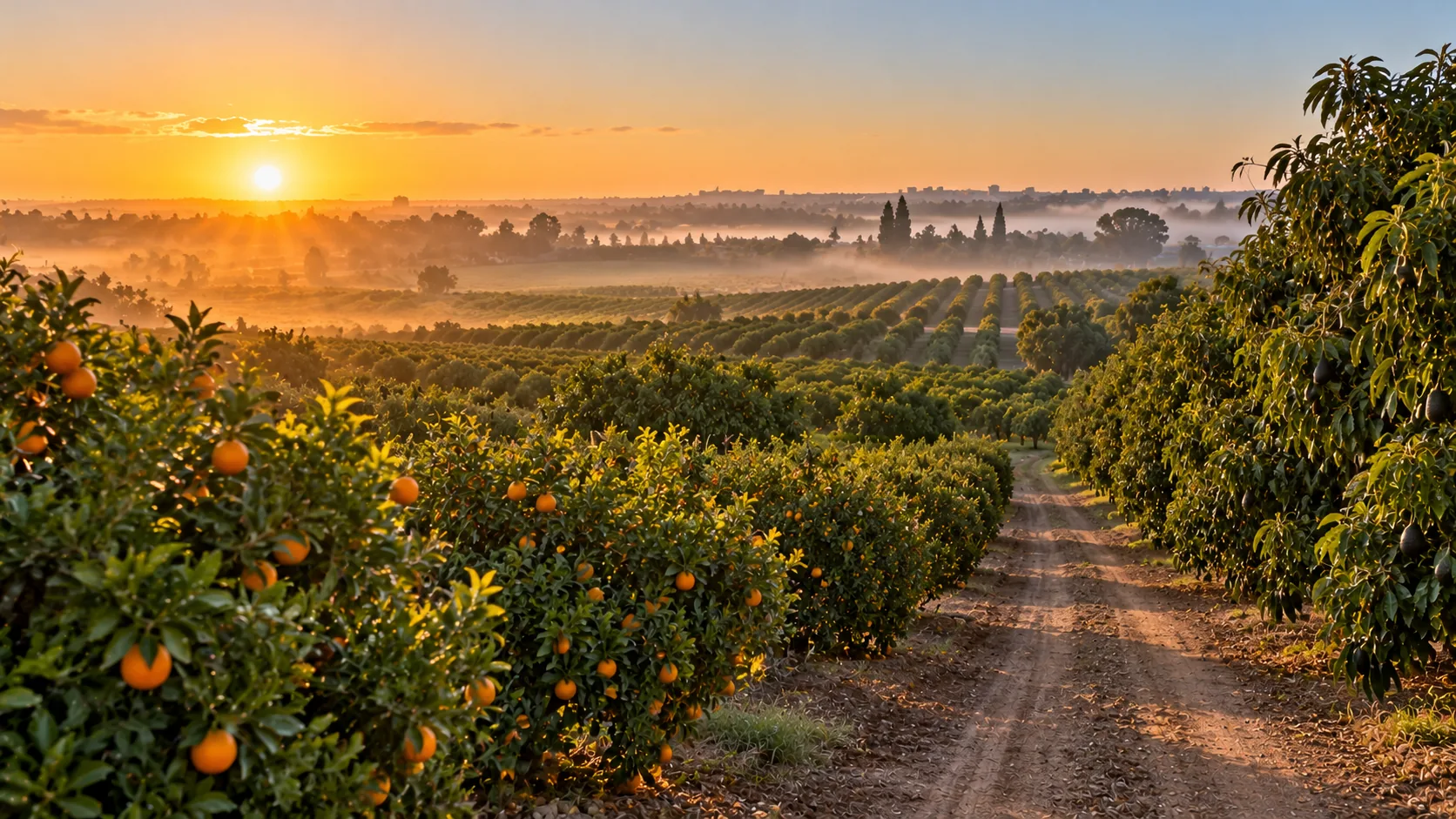
About 3,000 dunams of farmland, mostly citrus orchards, including 300 dunams of avocado. To the west of the moshav lies the Bnei Zion nature reserve, about 100 dunams.
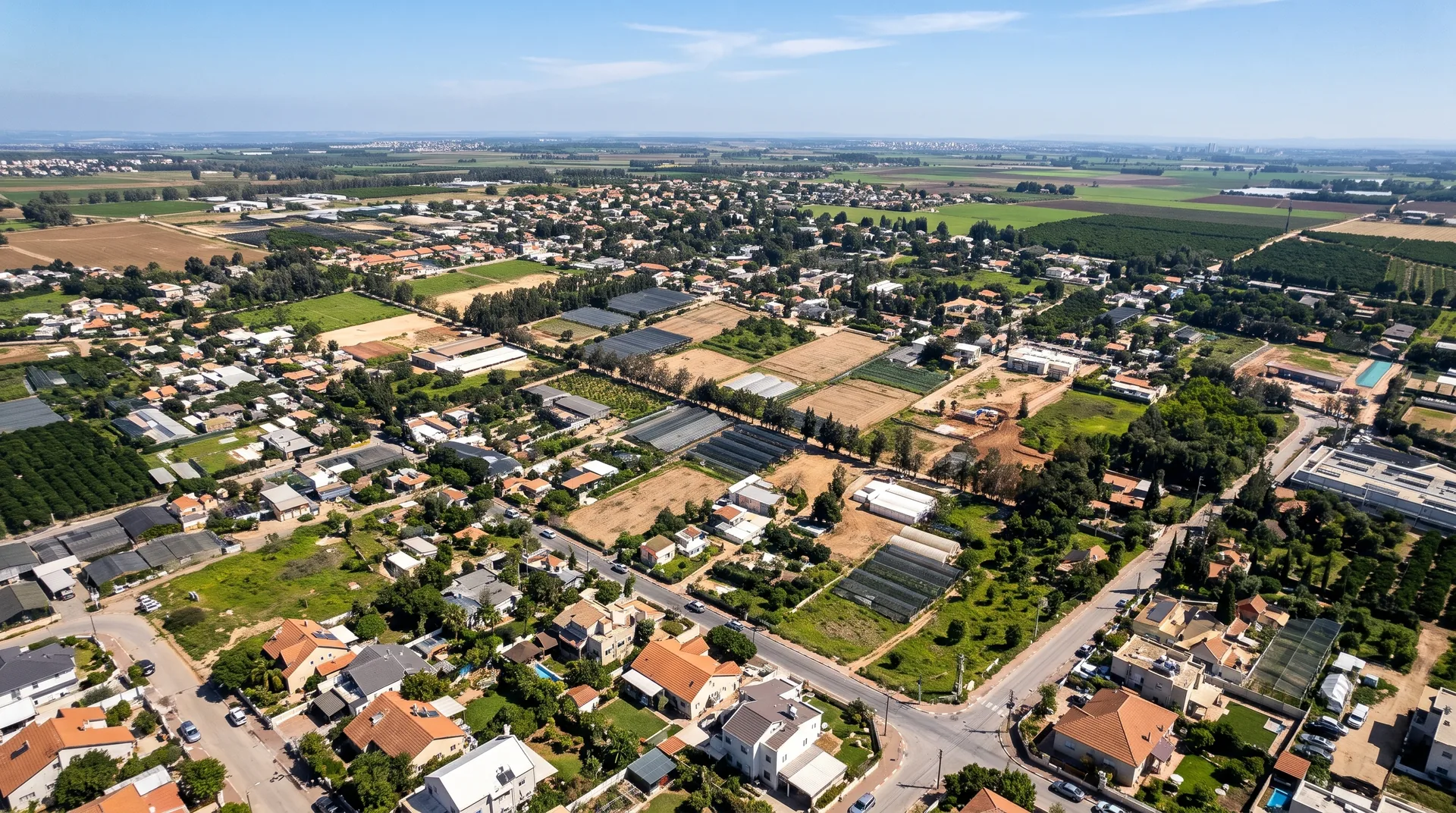 Open in map
Bnei Zion was founded on 27 March 1947 under the name Givot Raanana, and was renamed in honor of the Bnai Zion order, an American Zionist organization that supported its founding. The moshav was established by the Middle Class Department of the Jewish Agency and the Private Agriculture Council, and its first group numbered 15 families, among them farmers, veterans of the British army, soldiers of the Jewish Brigade and Holocaust survivors.
The moshav belongs to the Agricultural Union movement, and the regional council’s planning document defines it as a “cooperative agricultural village”. Its cooperative association holds persimmon and avocado orchards, and the moshav has poultry, vegetables, flowers and horse farms. At the end of 2024 it had 1,150 residents in about 322 families, and it is ranked in socioeconomic cluster 9 out of 10.
In 2024 an appraiser quoted in ynet described Bnei Zion as “the most expensive moshav in Israel”. Its character is defined by the large farm estates, the private houses and the orchards that surround it.
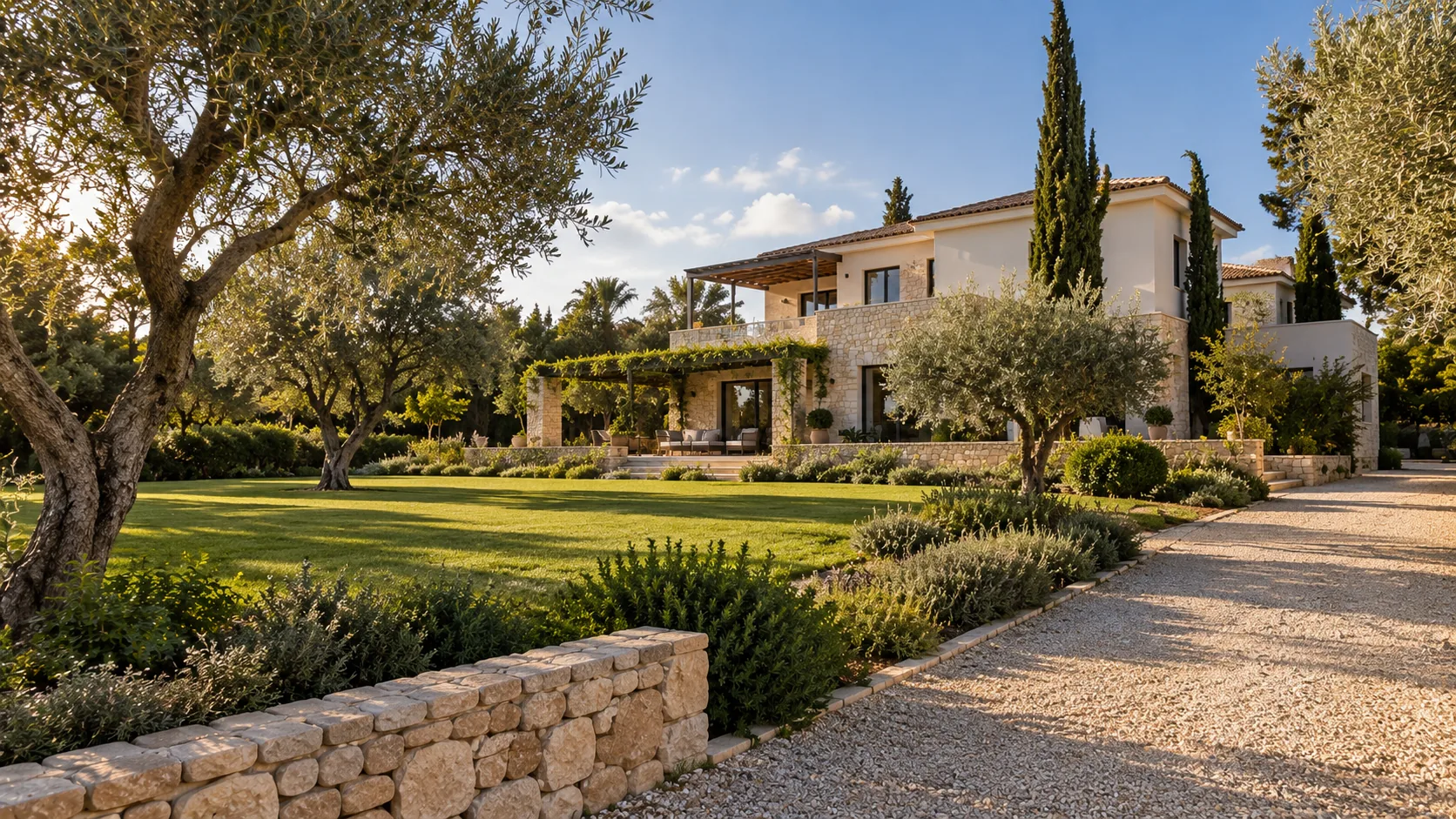
Bnei Zion offers moshav life with services inside the village: a grocery store, a swimming pool, a gym, a sports hall and a medical clinic, alongside orchards and a nature reserve.
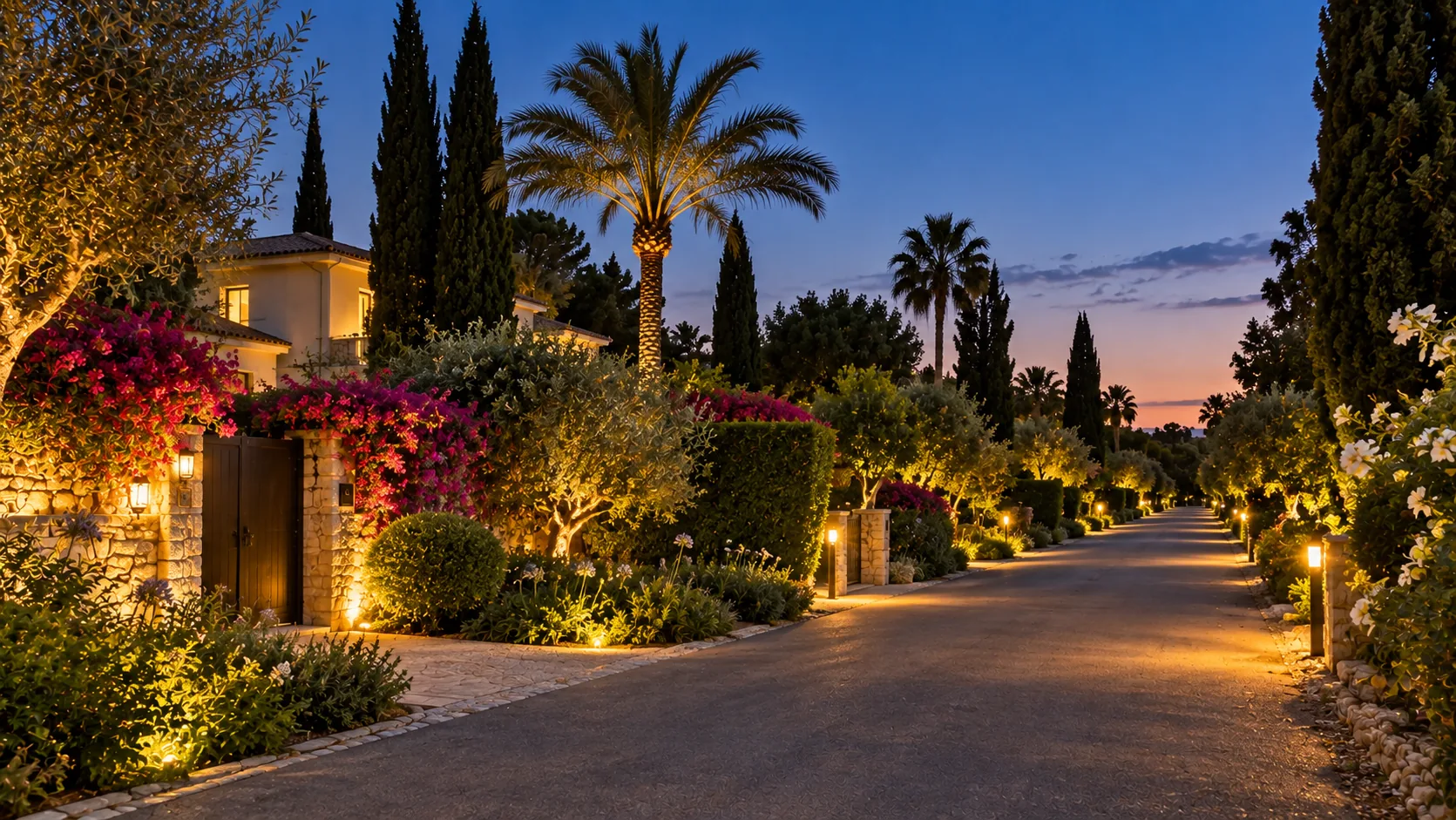
A swimming pool, a gym, a sports hall, a tennis court and public gardens.
A grocery store, a Meuhedet health clinic, a fuel station, an active library and an archive in the old grocery store building.
The Beit HaAm events hall and two synagogues, and a youth center of the Agricultural Union youth movement, shared by Bnei Zion, Batzra and Herutzim.
The Gozh & Daniel bistro, on Anshei Bereshit Street inside the moshav.
The Bnei Zion nature reserve on the Herutzim ridge, declared in 1968 and listed as a “hot spot” for endangered wild plants. Visits are on foot, along marked trails and free of charge.
Children in Bnei Zion attend the schools of the Hof HaSharon Regional Council. The school registration zone should be verified with the Hof HaSharon Regional Council.
An elementary school for grades 1 to 6, shared by Bnei Zion, Batzra and Herutzim.
Most pupils in the regional council continue to this six year school at Kibbutz Shefayim.
Activities of the Agricultural Union youth movement, shared by Bnei Zion, Batzra and Herutzim.
The first houses of Bnei Zion stand about 1 km west of Route 4, and the moshav connects to it at the Hadarim interchange.
About 1 km east of the first houses of the moshav.
Connects the moshav to Route 4, between the Batzra and Dror interchanges.
A planned east west road from the Hadarim interchange to Route 6 at the Eyal interchange. The interchange is ready for the connection, but this section of the road has not yet been built.
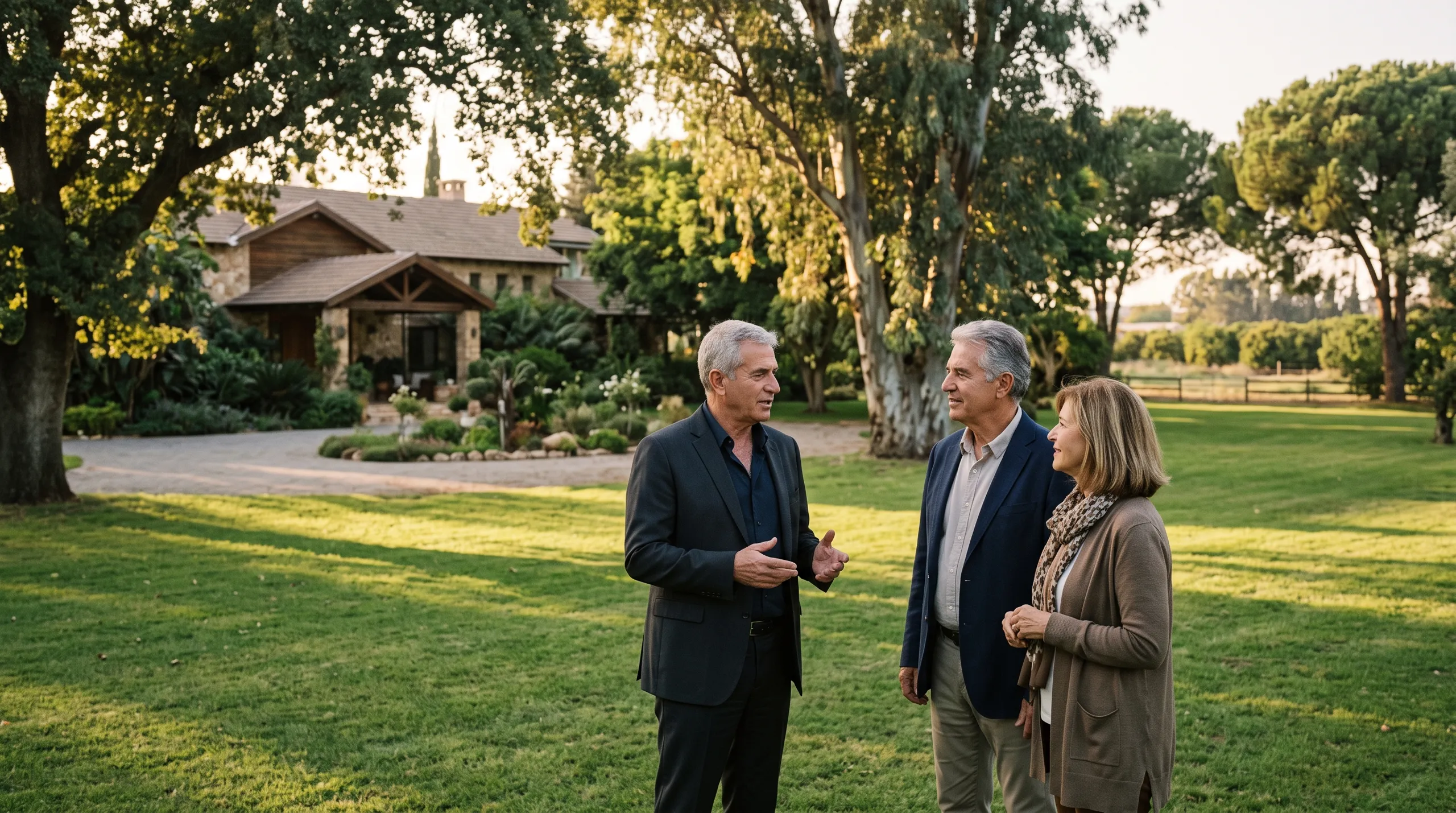
Few sales are recorded in Bnei Zion, and every property is a case of its own: the size of the farm estate, the rights in the residential plot, the permits and the applicable plans. That is why we price according to reported sales, rights and plans, rather than an average for the moshav.
RS Nadlan accompanies transactions in the neighborhoods of north Tel Aviv and the Sharon, and knows the families looking for a private house or a farm estate in the Sharon. When it is right for the seller, we present the property directly to suitable buyers.
For owners planning the sale of a farm estate or a house in Bnei Zion, we offer exclusive representation with a discreet marketing plan, and for buyers we present properties for sale in the Sharon. We also act as a real estate agency in Herzliya and in the communities of Hof HaSharon.
According to an appraiser quoted in ynet in June 2024, farm estates in Bnei Zion trade at about ₪20 to ₪35 million, about ₪30 million on average, with roughly one sale every two years. Each farm estate requires an individual appraisal.
Across three detached house sales reported in 2024 and 2025, the median was about ₪9.45 million and about ₪36,714 per m², within a range of ₪7.71 million to ₪17.2 million. Two further rows from 2023, on the same day and at the same address, were excluded. This is a very small sample.
According to ynet, most farm estates exceed 15 dunams, usually 15 to 17 dunams (a dunam is 1,000 m²), compared with about 10 dunams in neighboring Batzra.
According to ynet, two units are currently permitted, and the moshav is promoting a third with the support of the regional council. The status of the plan should be checked with the Hof HaSharon Local Planning and Building Committee.
It allows the purchase of expanded rights in the residential plot: building according to the zoning plan without consent fees, the option of subdivision, inheritance and free transfer, in return for a purchase fee to the Israel Land Authority. The rates and conditions should be checked with the Authority and a lawyer.
The moshav is in the Hof HaSharon Regional Council. The elementary school is the Hovav community school, shared by Bnei Zion, Batzra and Herutzim, and most pupils in the council continue to the Hof HaSharon shared school at Shefayim. The registration zone should be verified with the council.
The moshav lies about 1 km west of Route 4 and connects to it at the Hadarim interchange. Route 551, an east west road planned to reach Route 6, is also due to connect there in the future.
In 2021, construction began in the moshav of a data center expected to serve Google, opposed by residents who filed a petition and an appeal. It is worth checking the location of the data center relative to a property before buying.
From the RS Nadlan professional blog